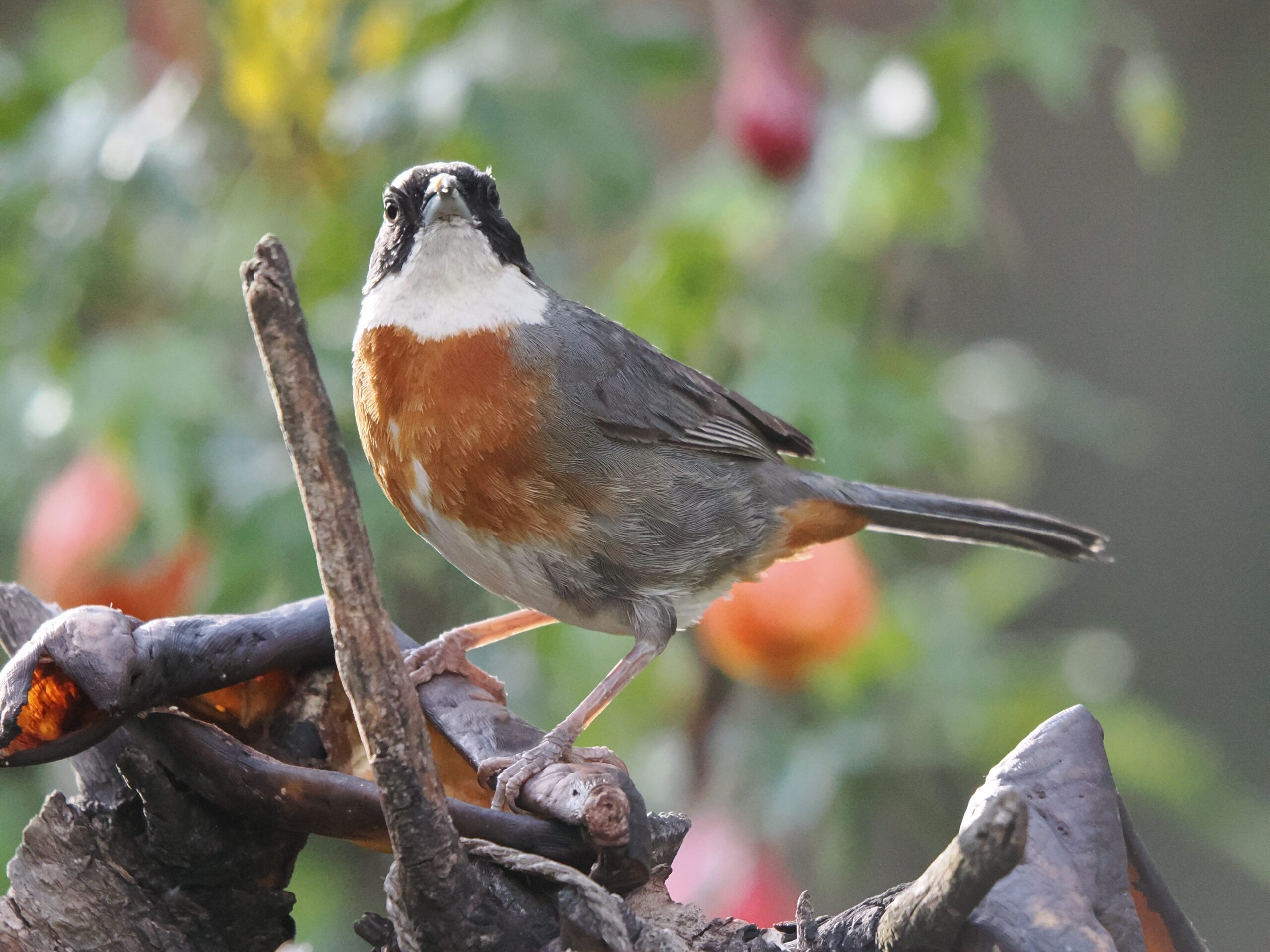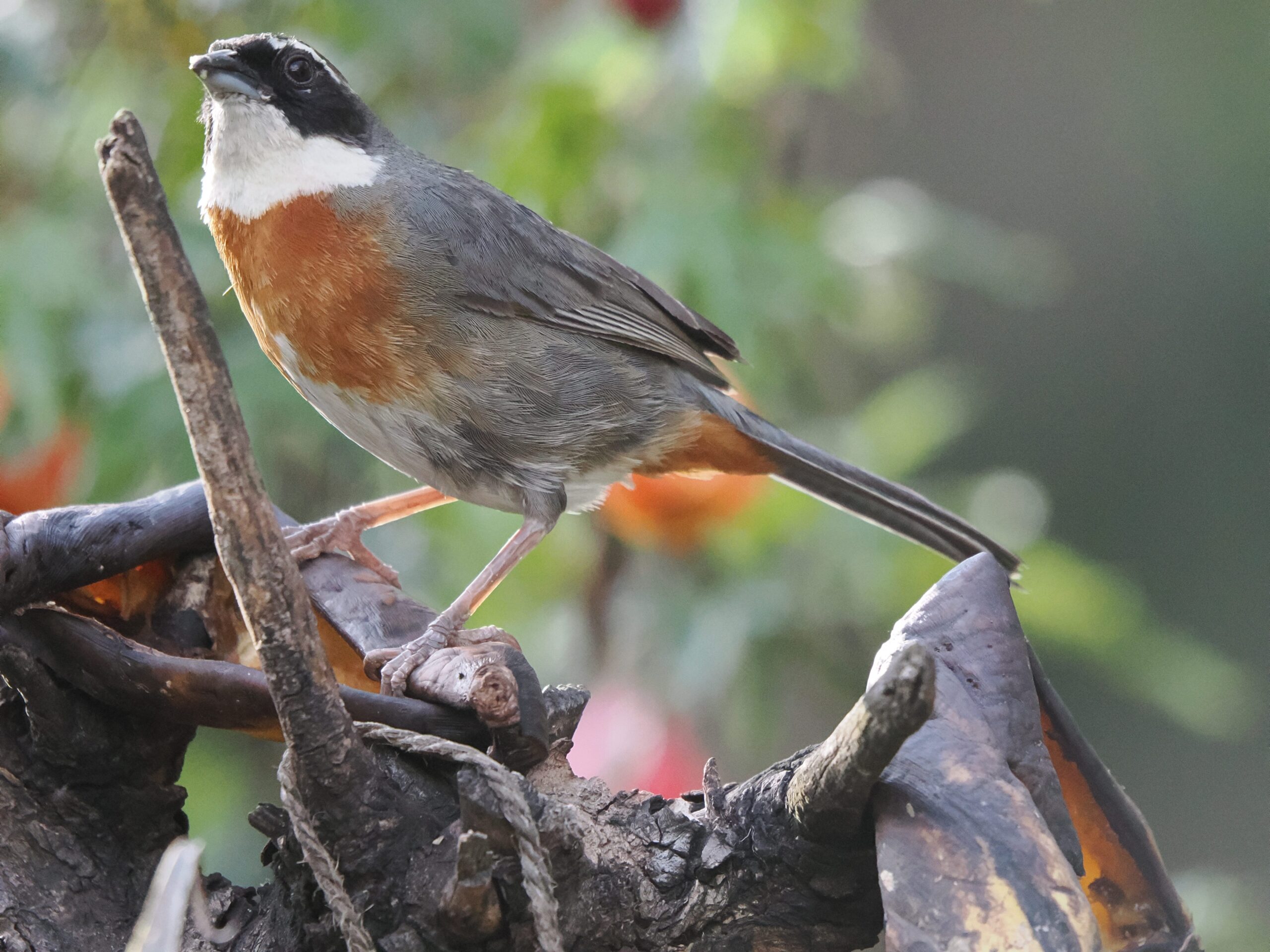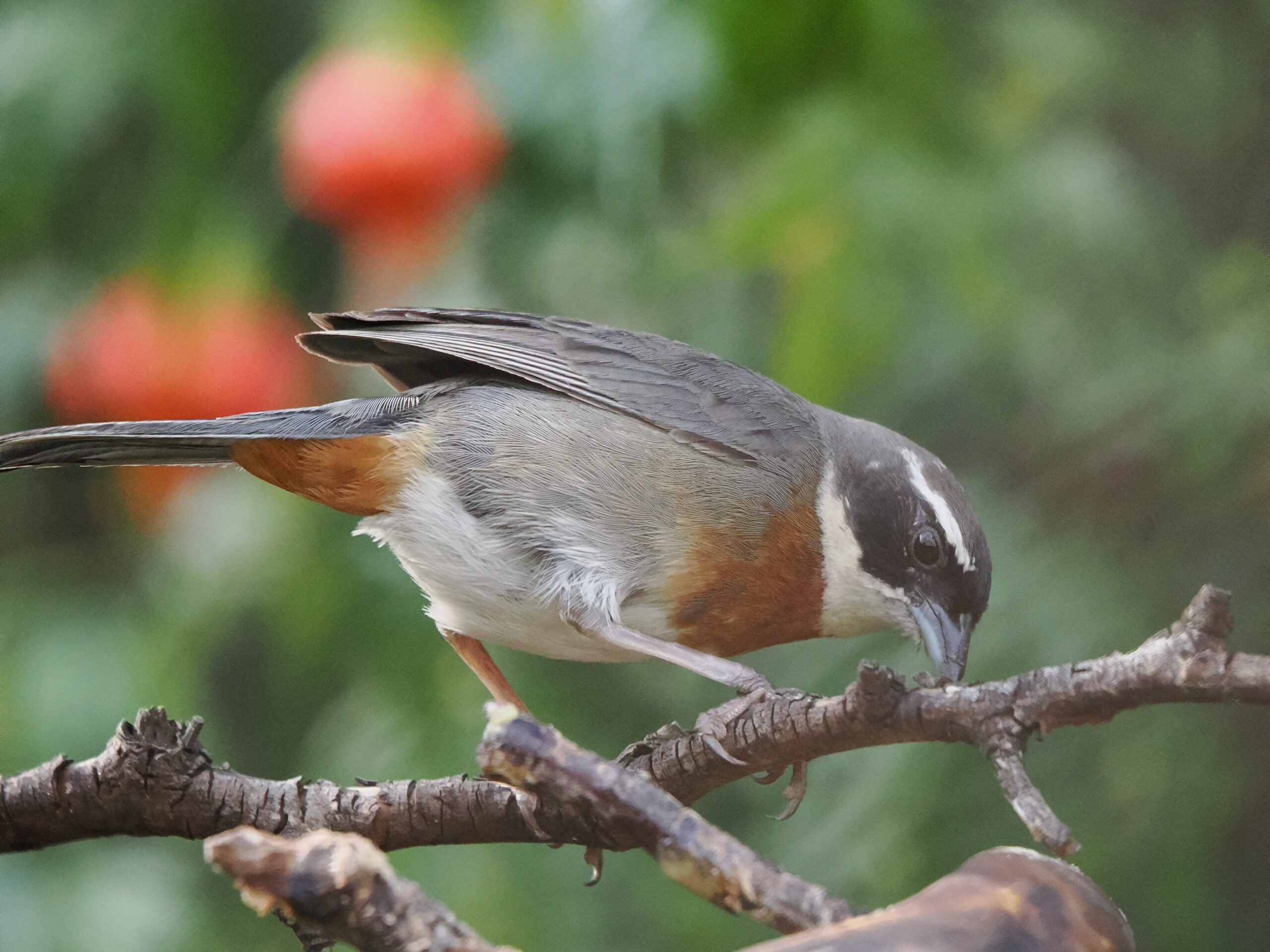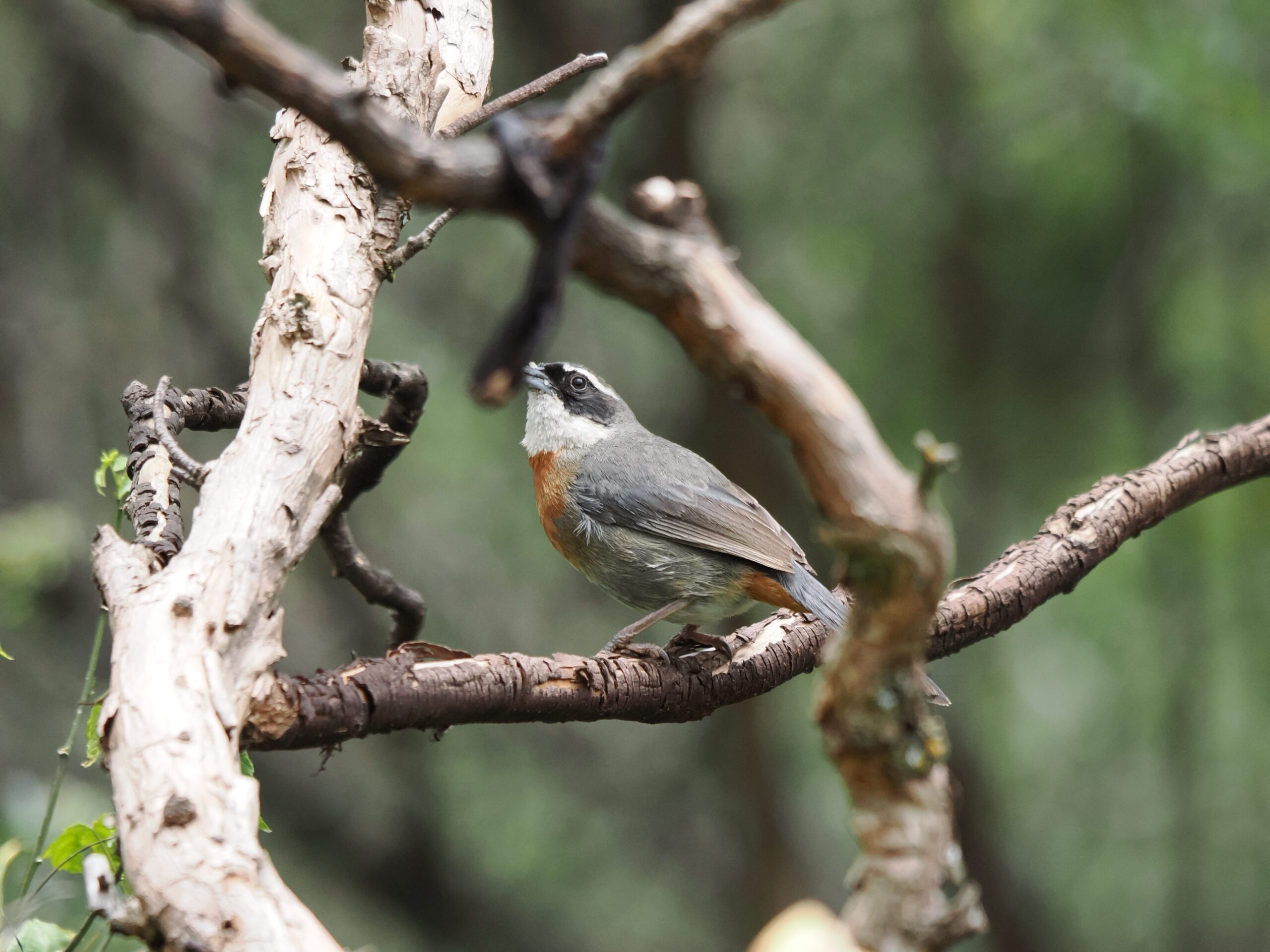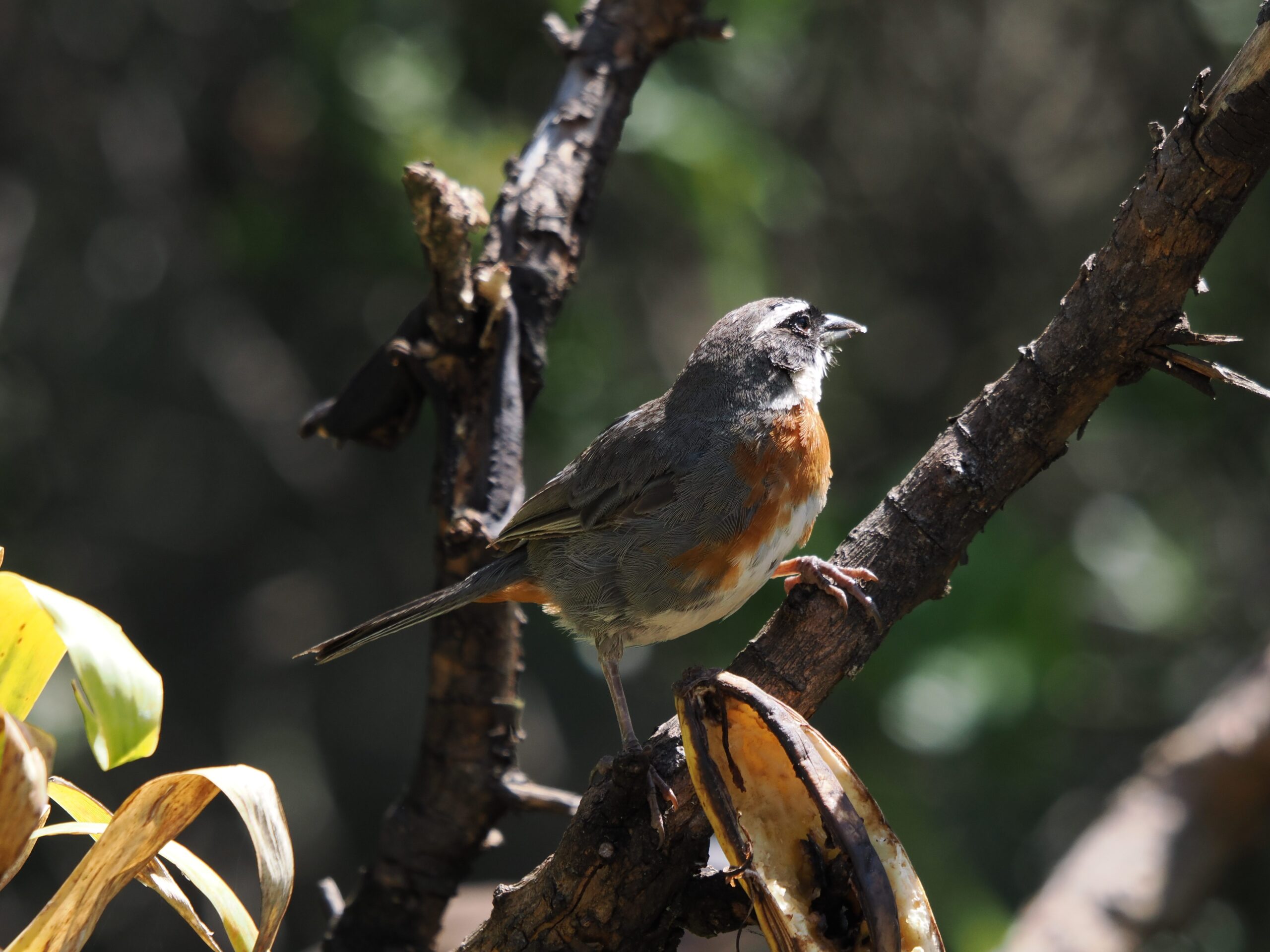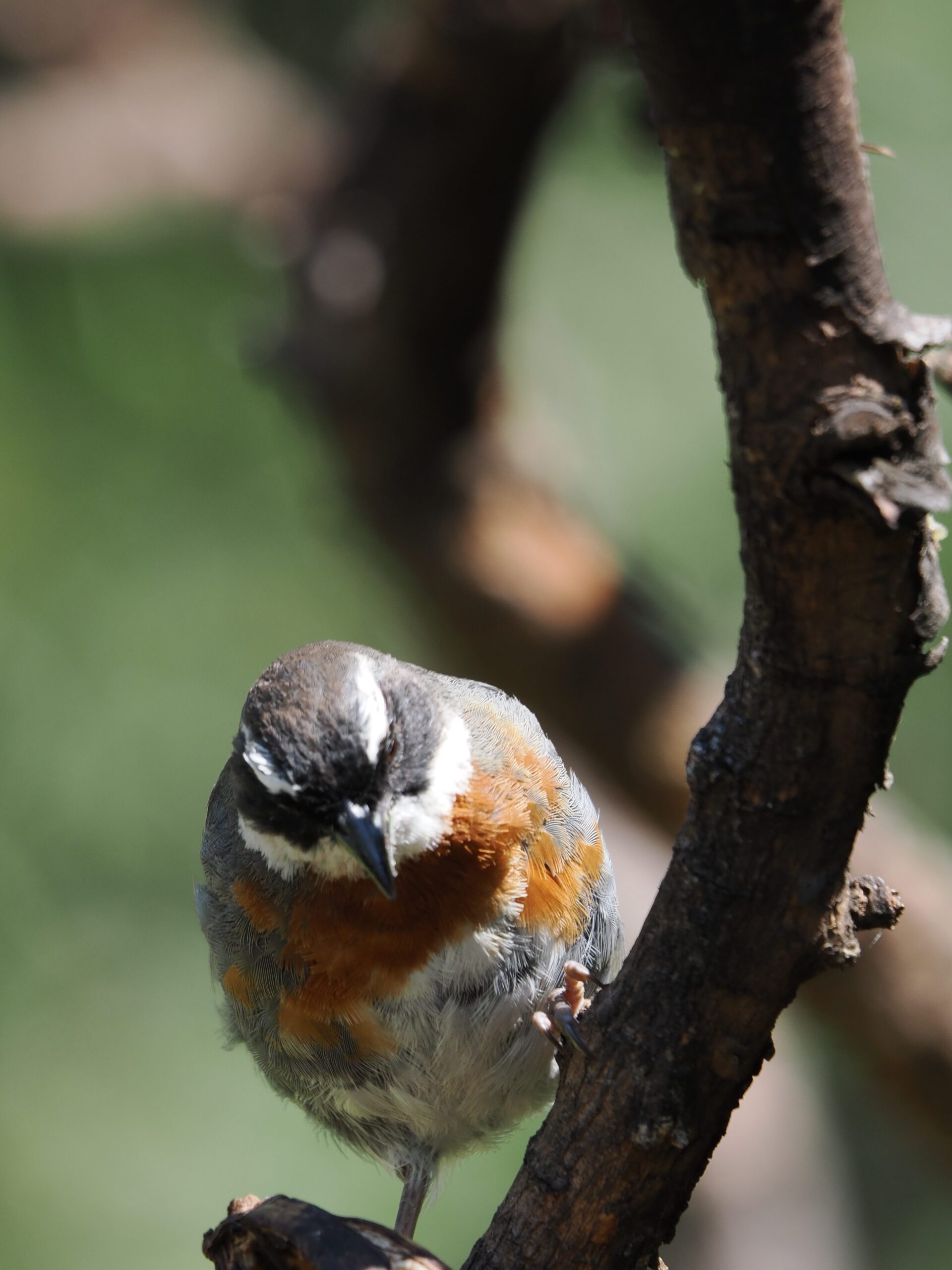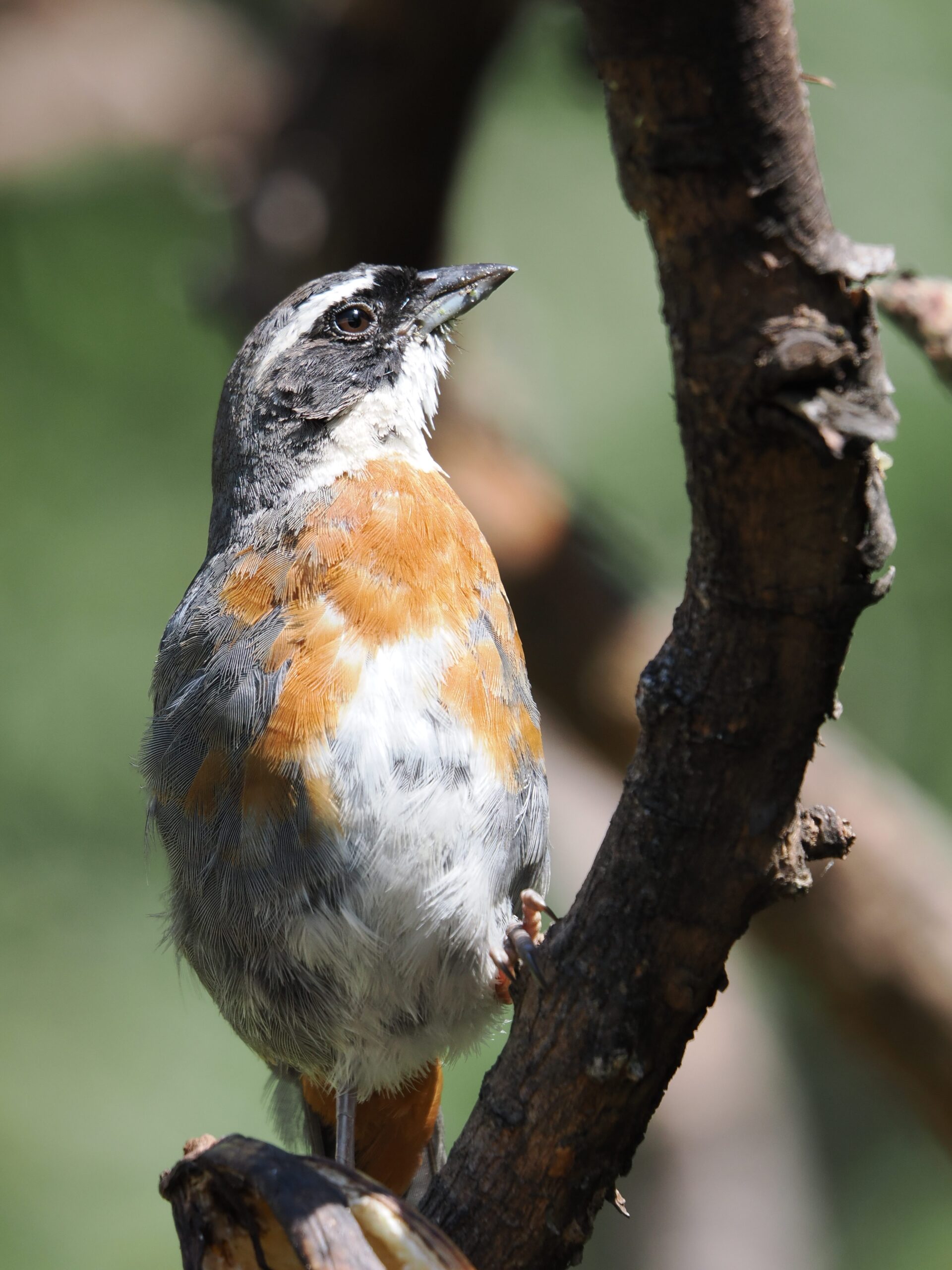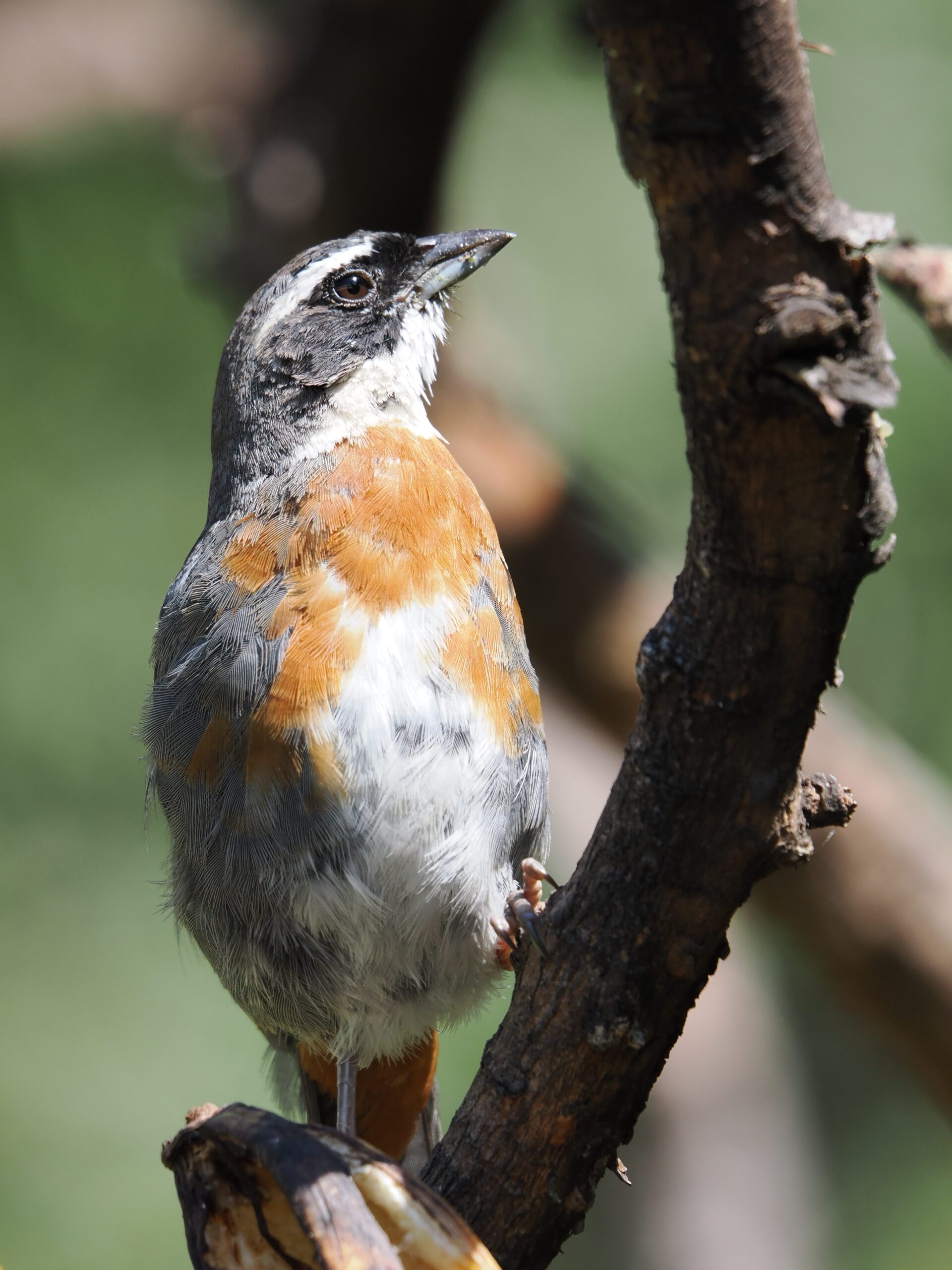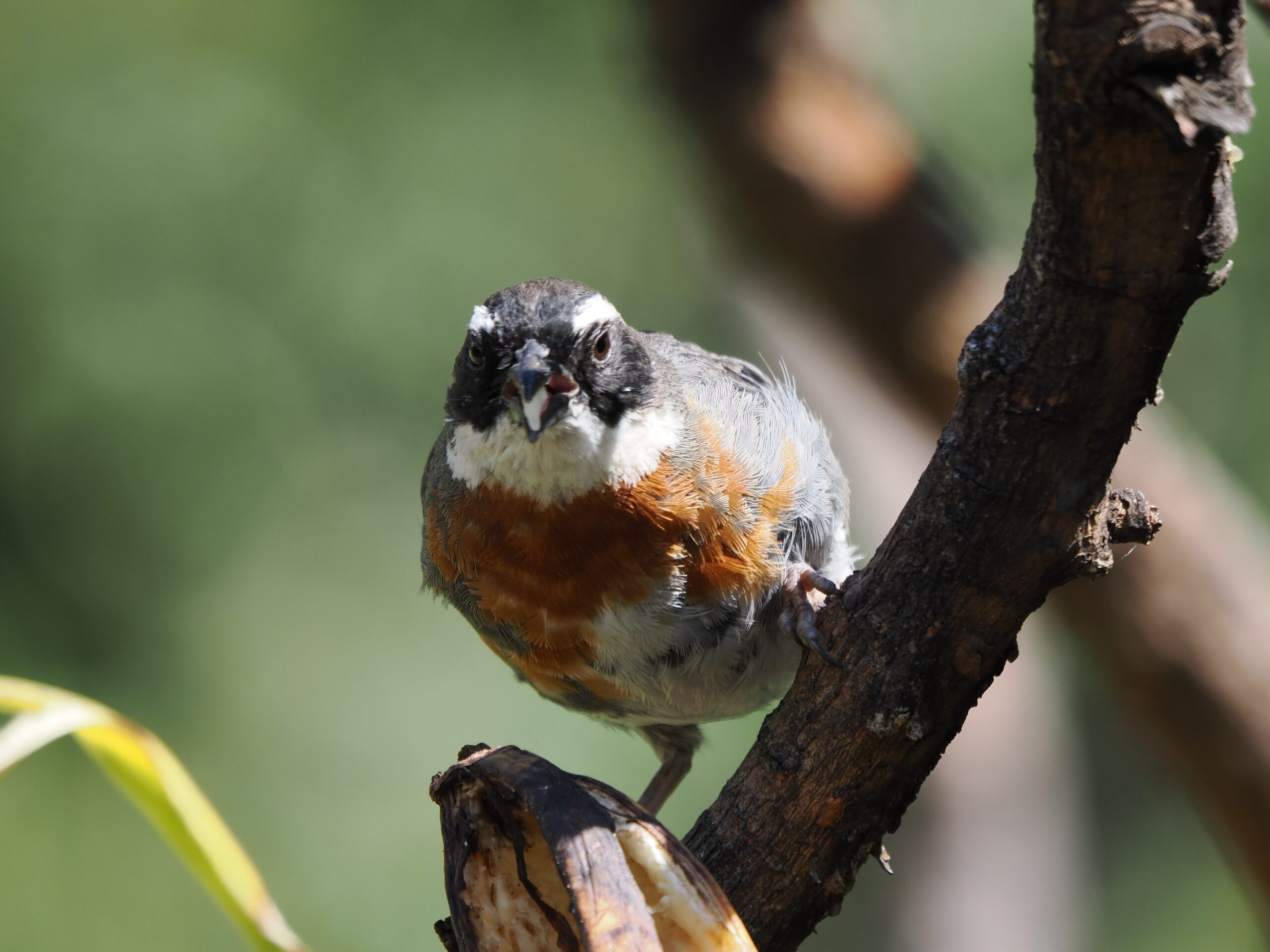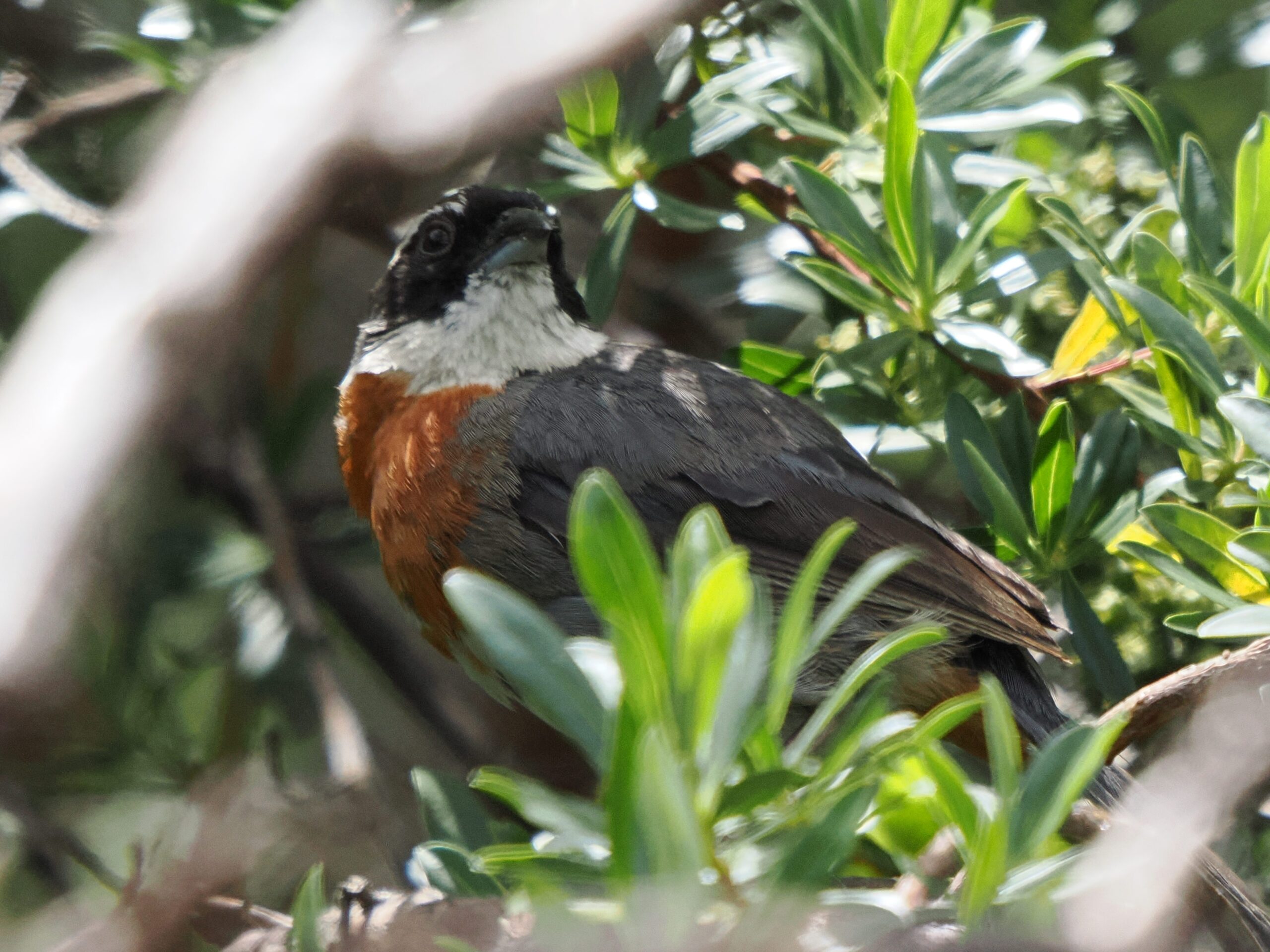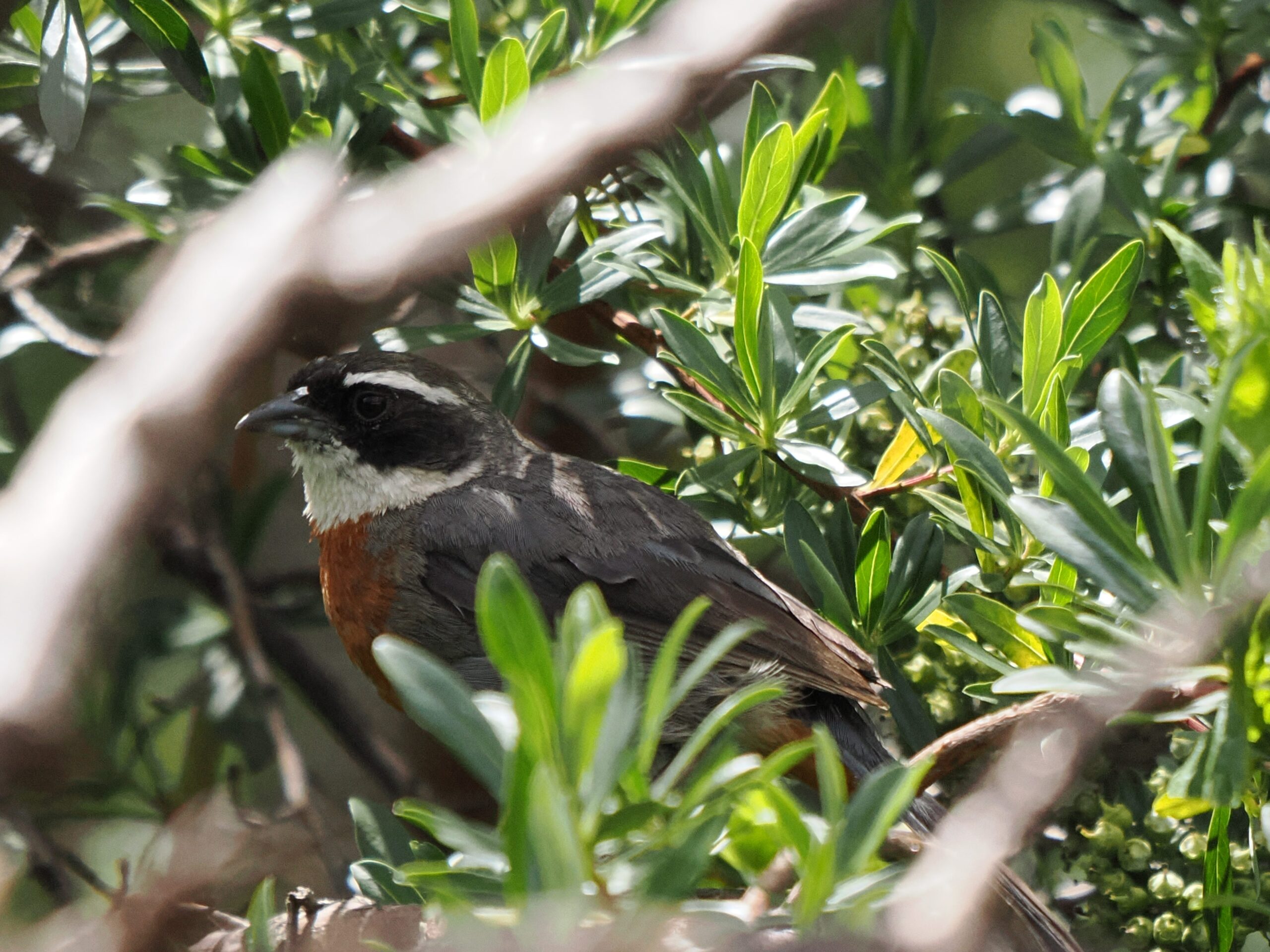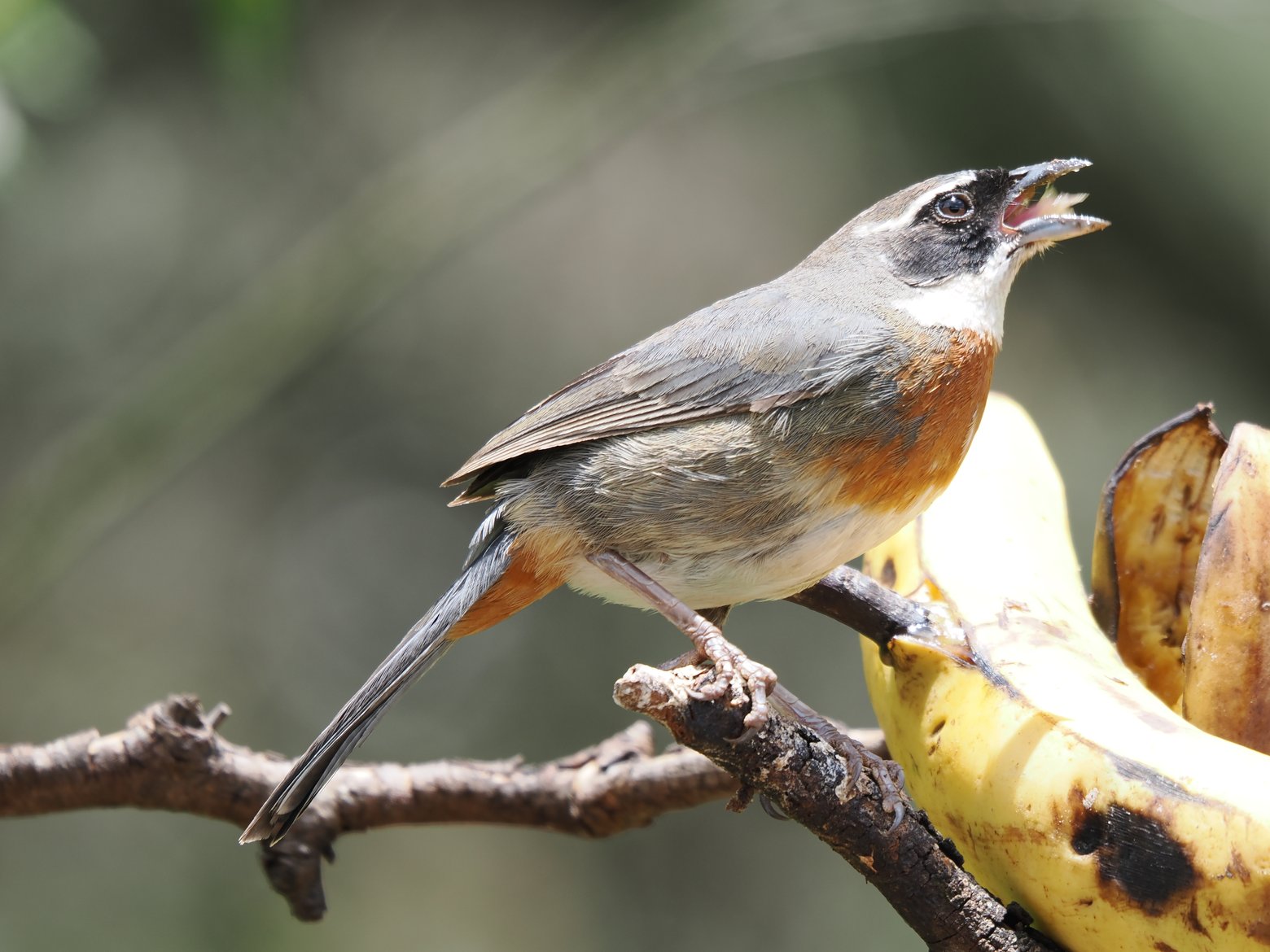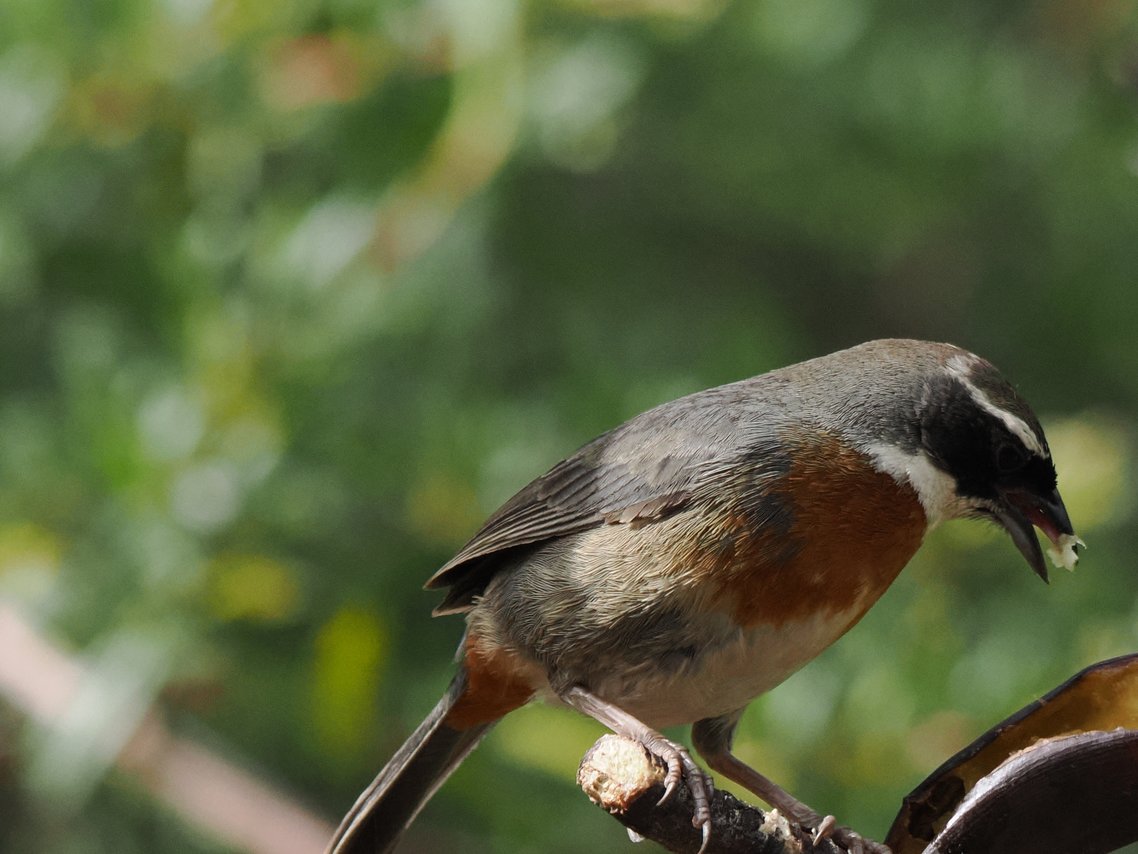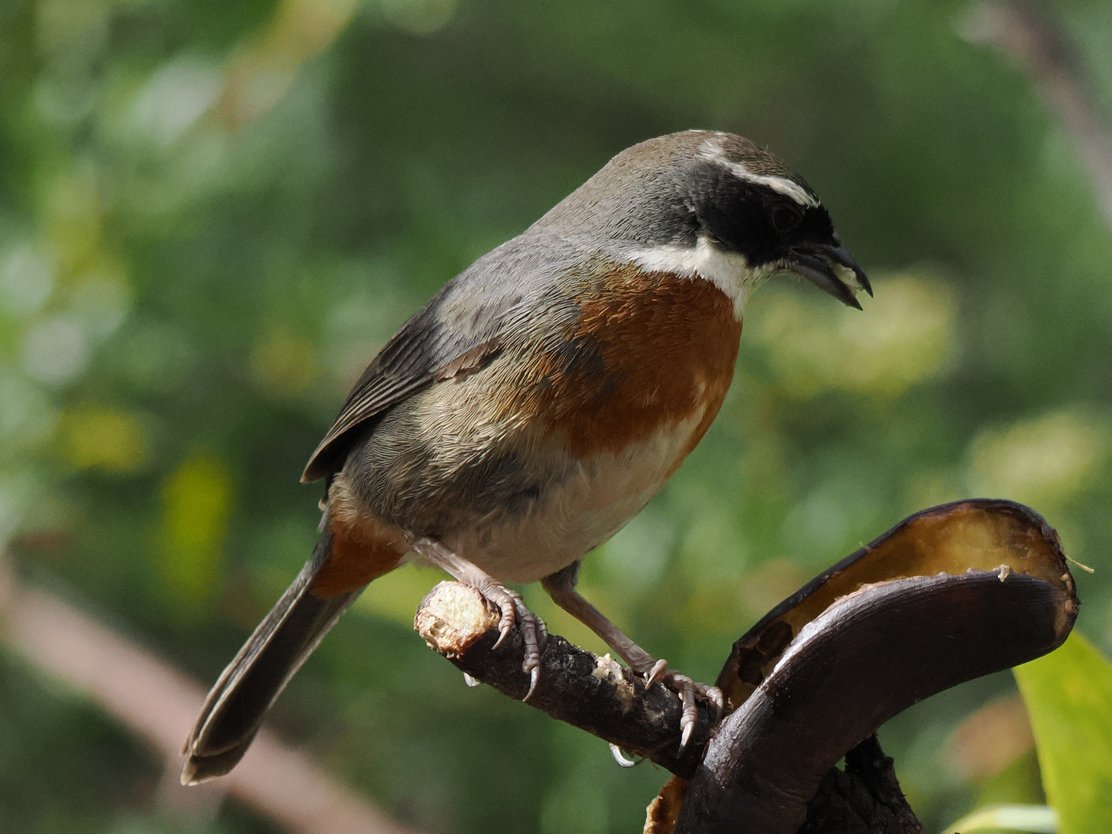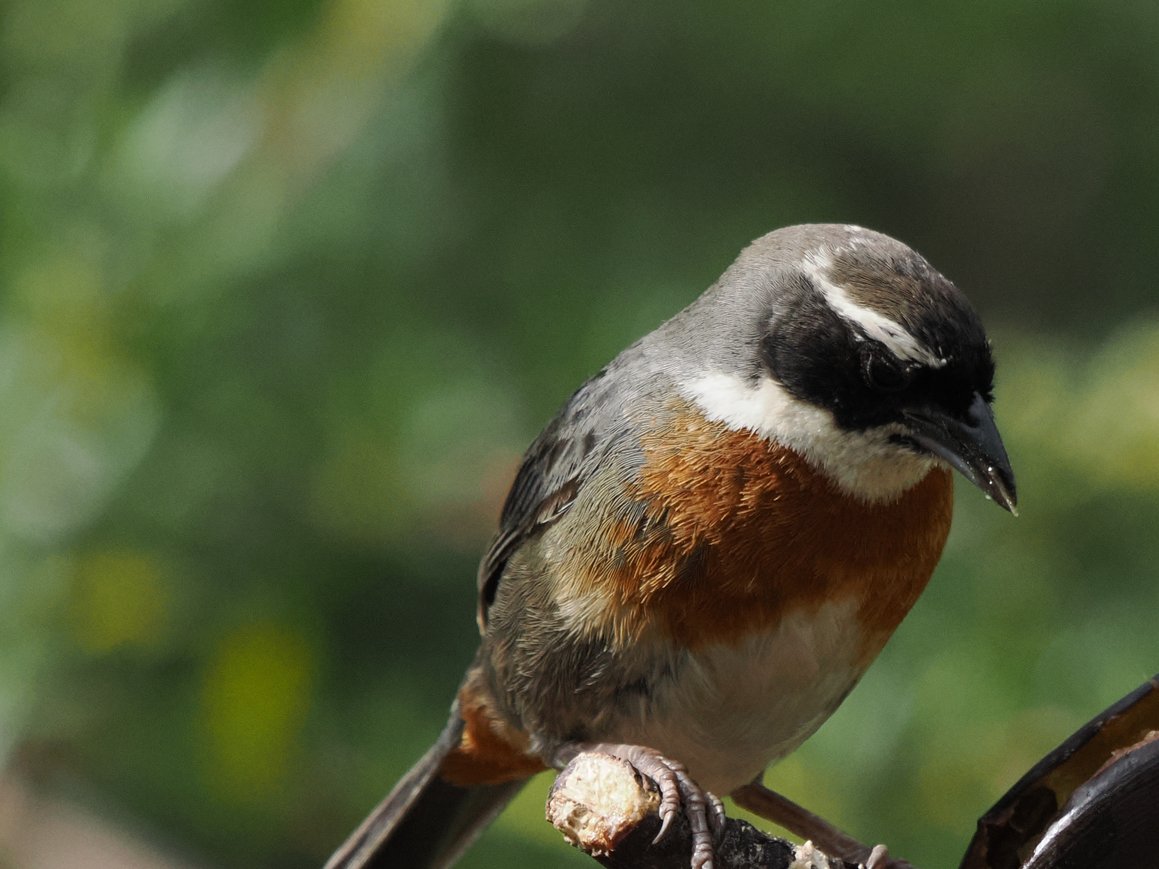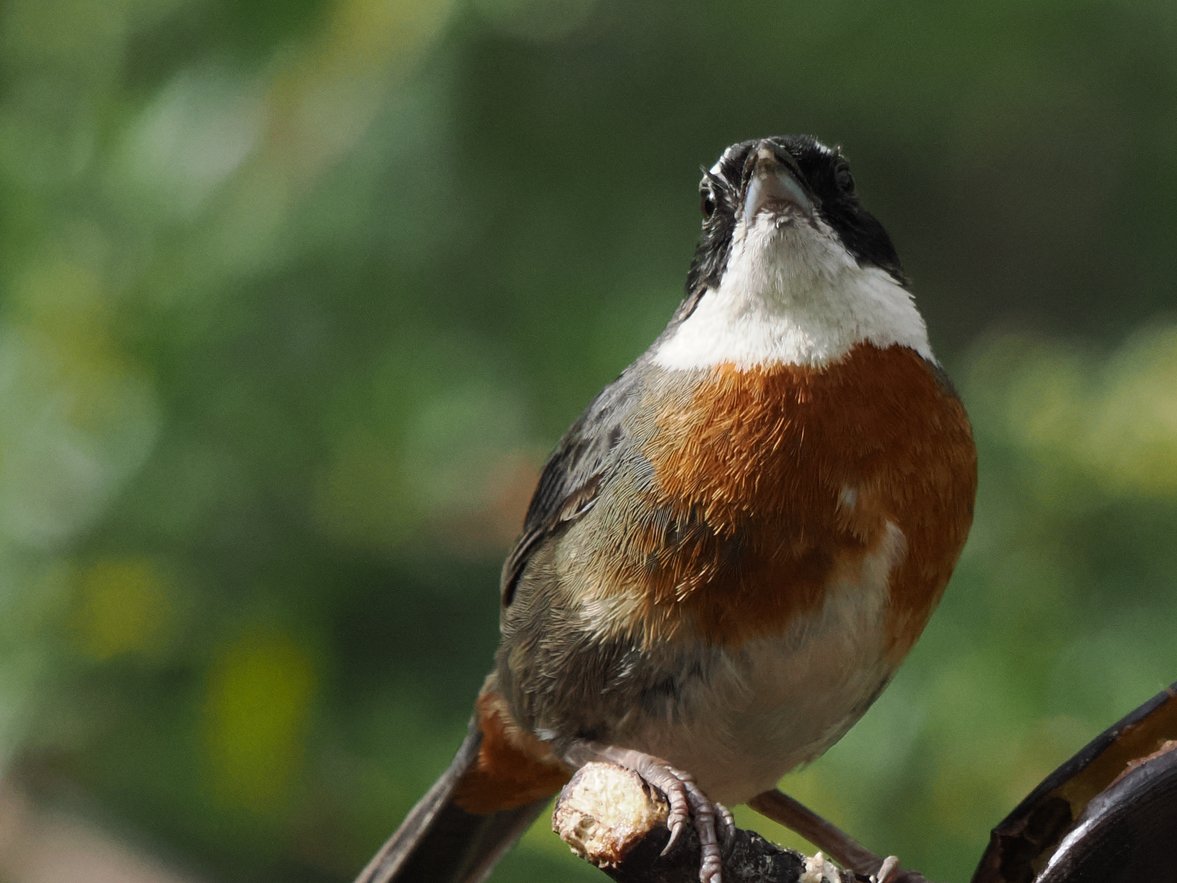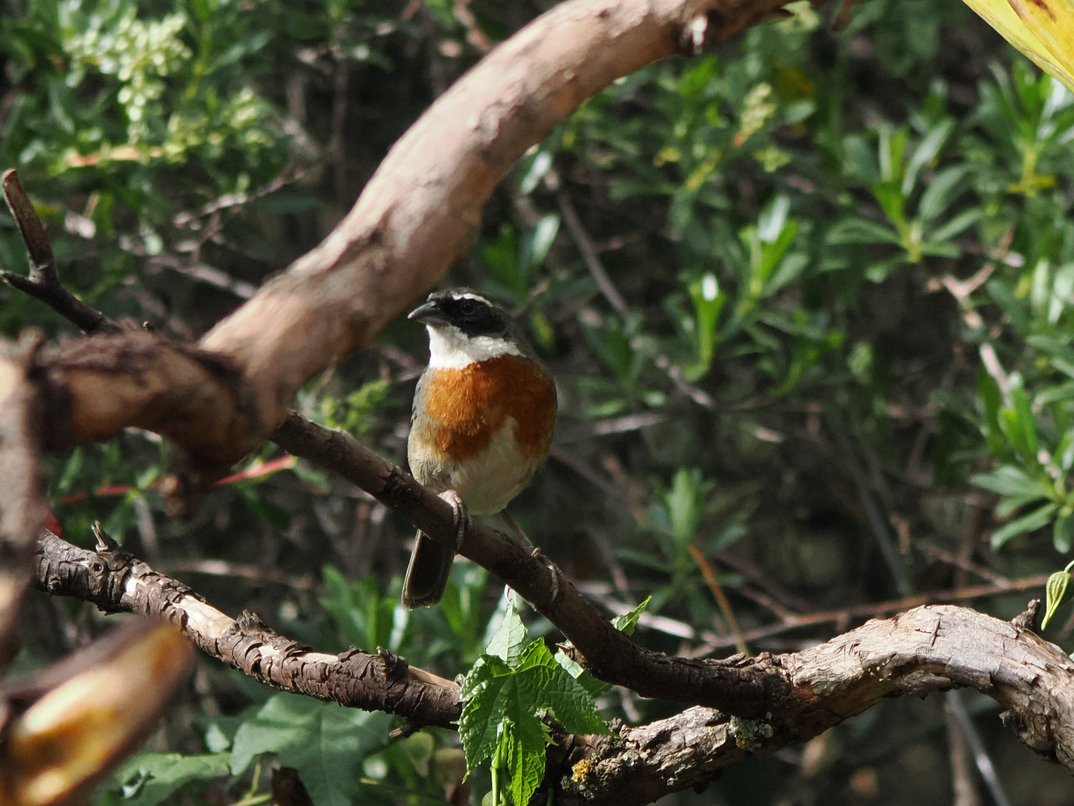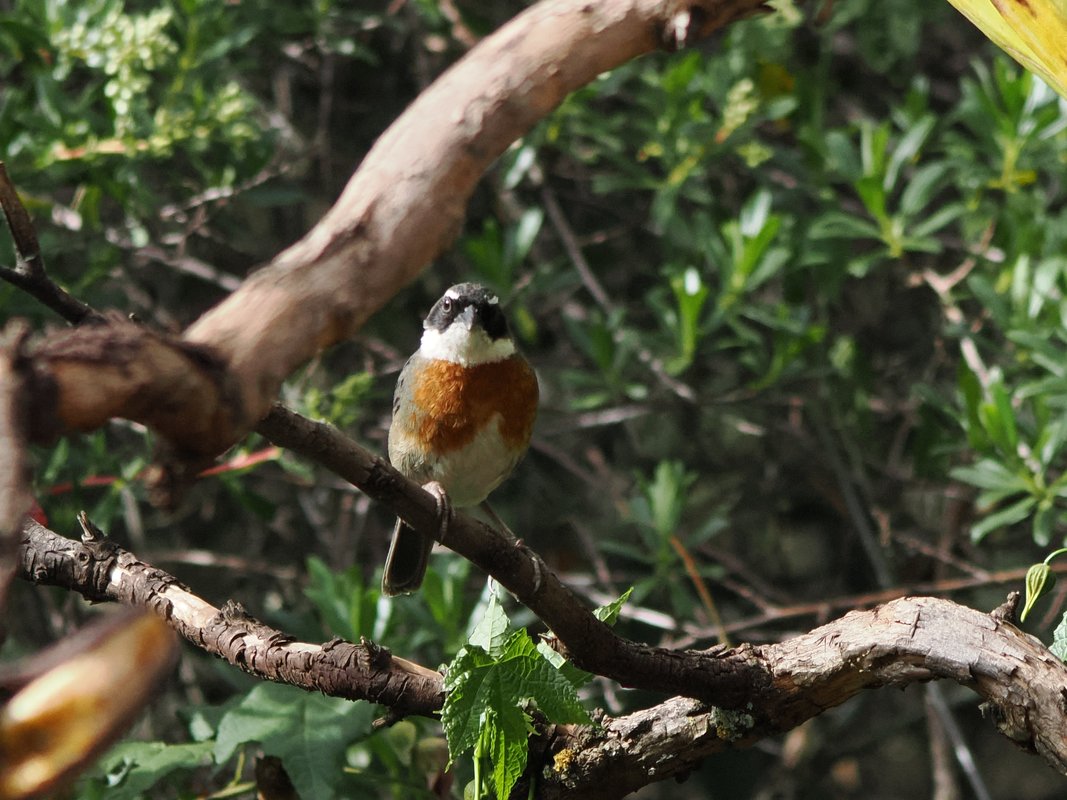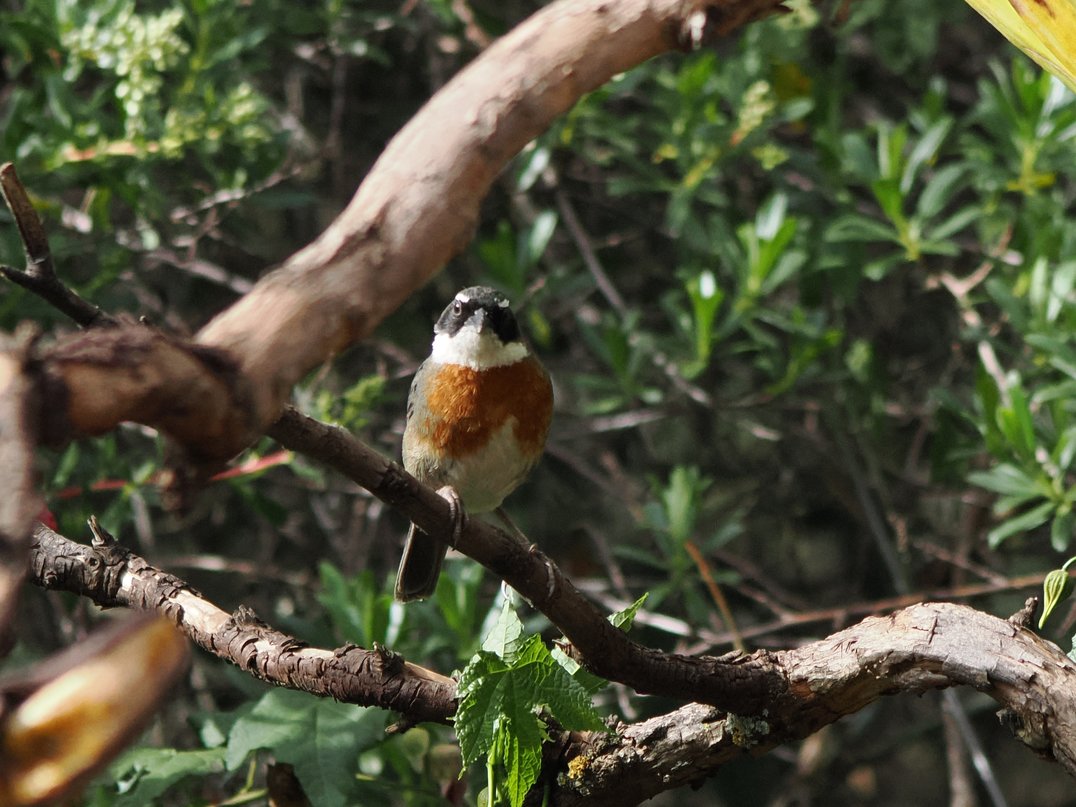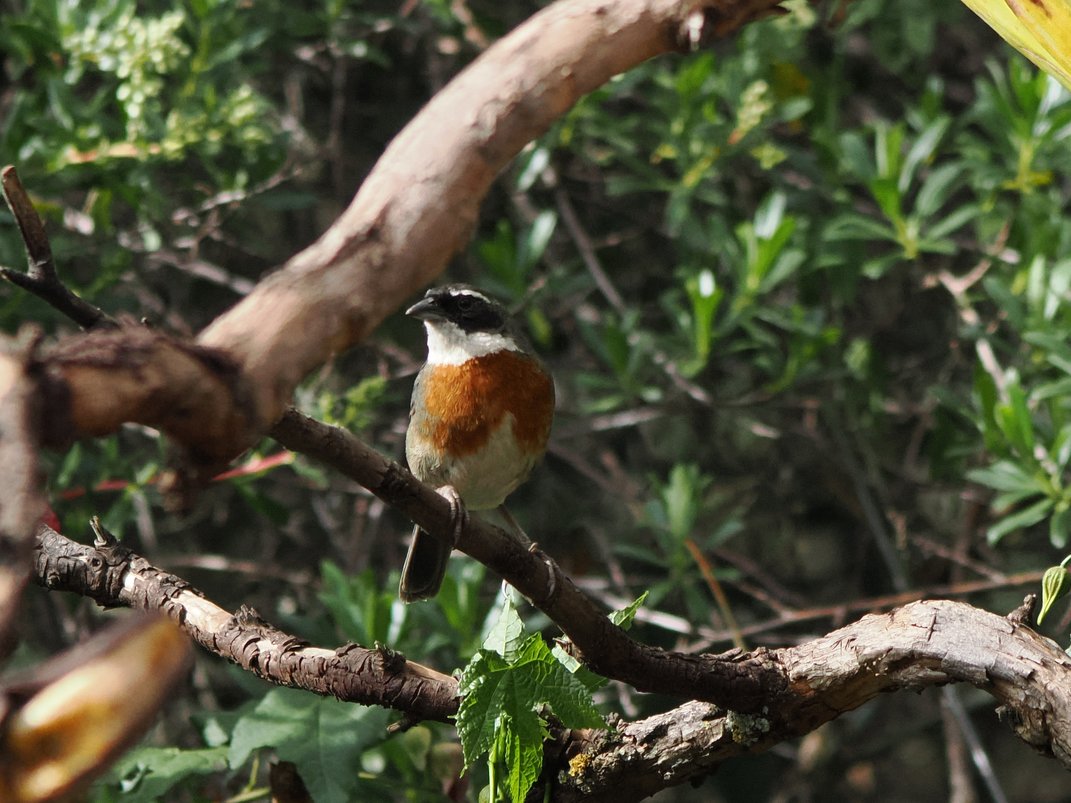
CHESTNUT-BREASTED MOUNTAIN FINCH ( Poospizopsis caesar )
Chestnut-breasted Mountain Finch (Poospizopsis caesar): An Endemic Jewel of the Southern Peruvian Andes
In the southern Andes of Peru lives a bird that embodies many of the characteristics that make the country’s biodiversity so remarkable: a restricted geographic range, adaptation to high-elevation environments, distinctive plumage, and a close ecological relationship with Andean shrublands and inter-Andean landscapes. This is the Chestnut-breasted Mountain Finch (Poospizopsis caesar), known in Spanish as the Monterita Pechicastaña or Monterita de Pecho Castaño.
From an SEO and conservation-communication perspective, this species offers exceptional potential because it connects several important topics: endemic birds of Peru, birdwatching in Cusco, high-Andean biodiversity, Andean shrublands, bird conservation, wildlife photography, and nature-based tourism.
Rather than presenting only an identification profile, this article explores a broader question: Why is Poospizopsis caesar such an important species for understanding and appreciating the southern Peruvian Andes?
A Bird Found Naturally Only in Peru
One of the most important characteristics of the Chestnut-breasted Mountain Finch is its status as an endemic species of Peru. This means that its natural geographic distribution is restricted to Peruvian territory, particularly the southern Andes.
Its range is primarily associated with the highlands of southern Peru, including areas of Apurímac, Cusco, and Puno.
Endemism fundamentally changes the way we should perceive this bird. When we encounter a Chestnut-breasted Mountain Finch moving through the shrubs of an Andean ravine or a high-elevation garden, we are not simply observing another small mountain bird. We are looking at a species whose evolutionary history and natural distribution are intimately connected with a particular region of Peru.
For international birdwatchers, this makes Poospizopsis caesar a particularly attractive target species. Many birders travel specifically to observe species that cannot be found naturally anywhere else in the world.
This gives endemic birds considerable value for specialized bird tourism, because they can transform particular regions into unique wildlife destinations.
Cusco is especially important in this context. The region is not only one of the world’s great cultural and archaeological destinations; it is also part of the natural range of bird species that represent Peru’s unique biological heritage.
Talking about the Chestnut-breasted Mountain Finch therefore also gives us an opportunity to broaden the international narrative surrounding Cusco.
Machu Picchu, the Sacred Valley, and the great archaeological complexes remain fundamental attractions, but surrounding them is a living landscape composed of Andean forests, shrublands, wetlands, puna grasslands, ravines, and extraordinary birdlife.
How to Identify the Chestnut-breasted Mountain Finch
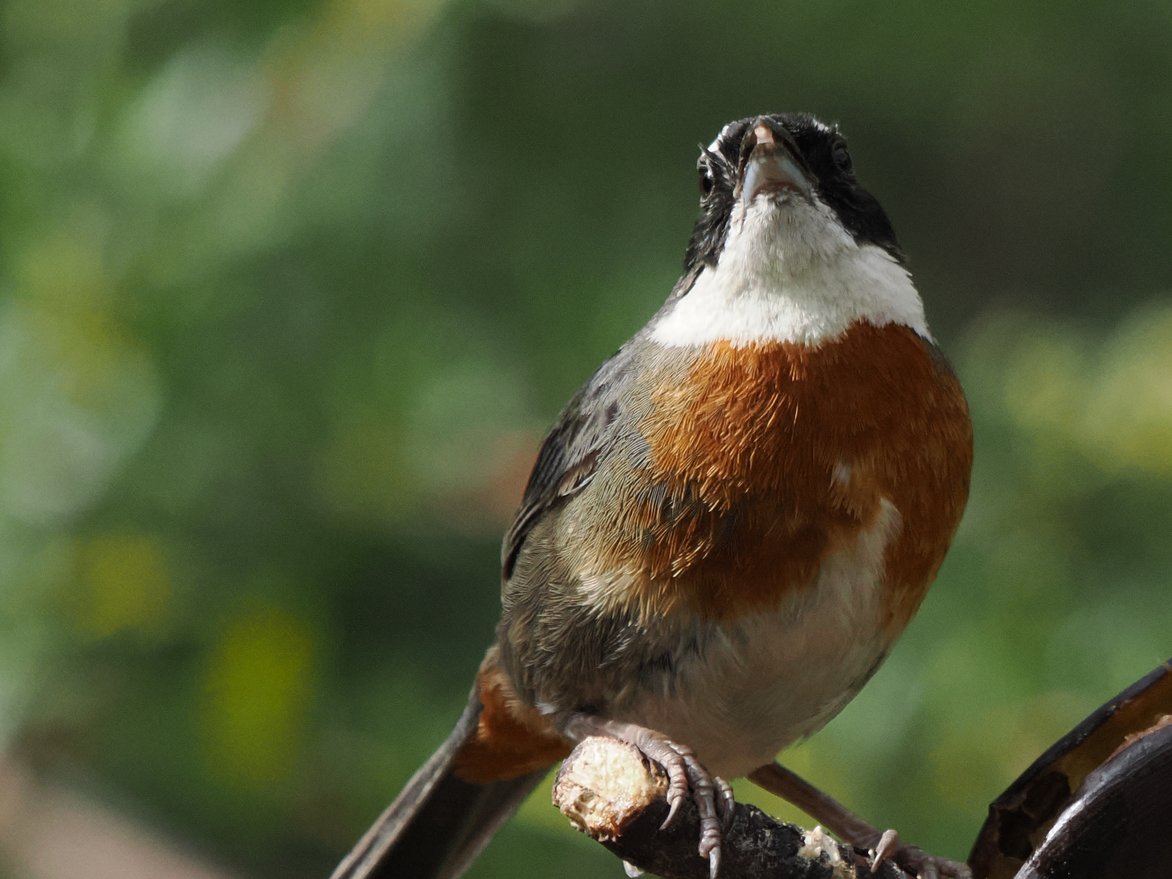
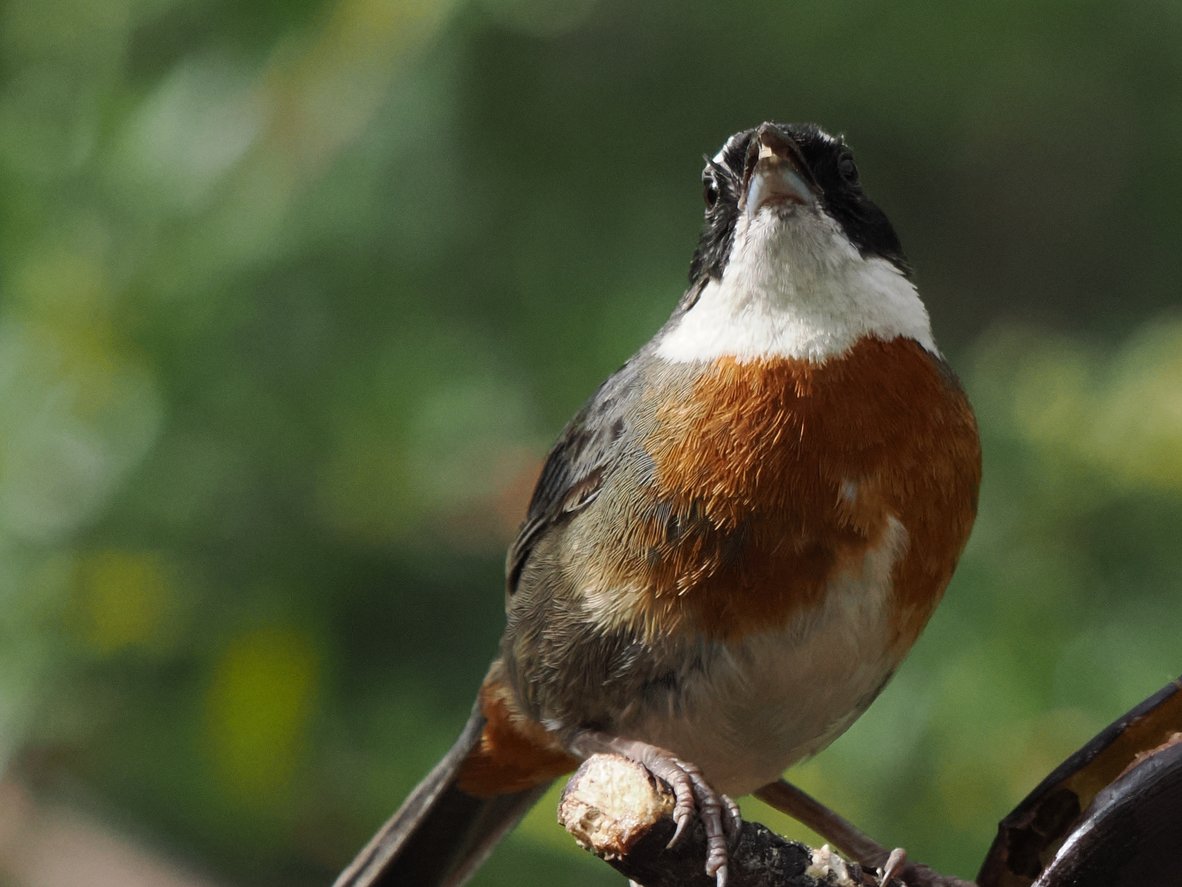
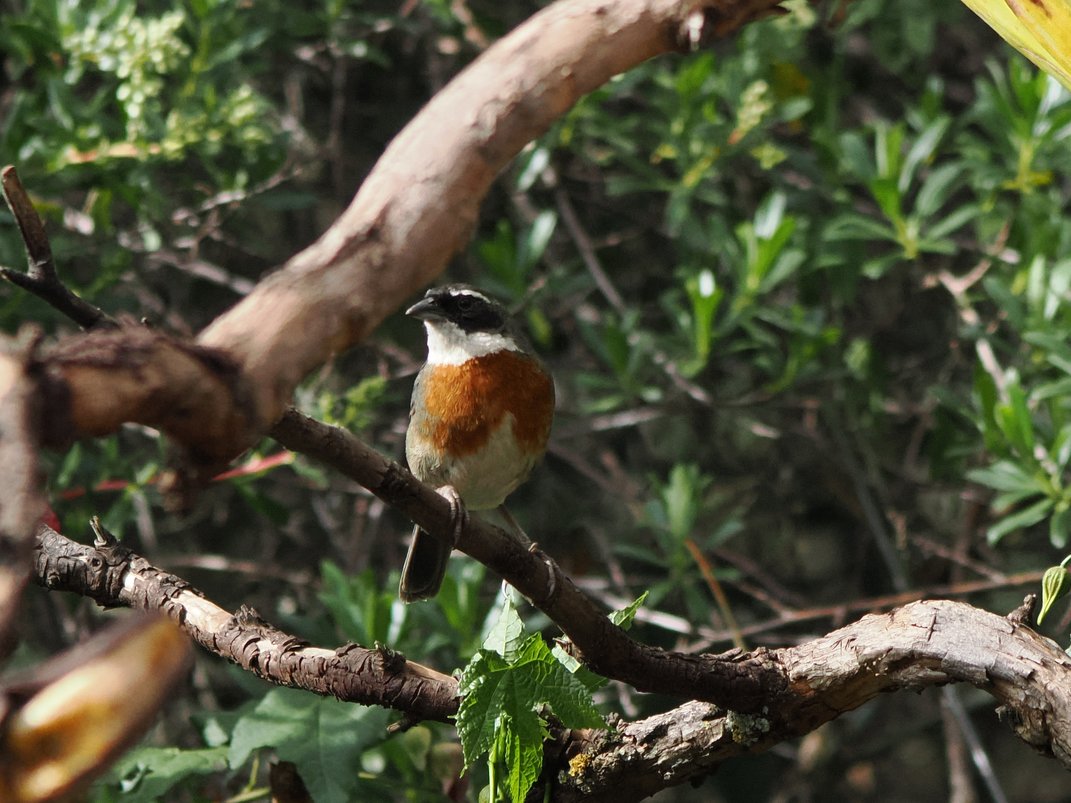
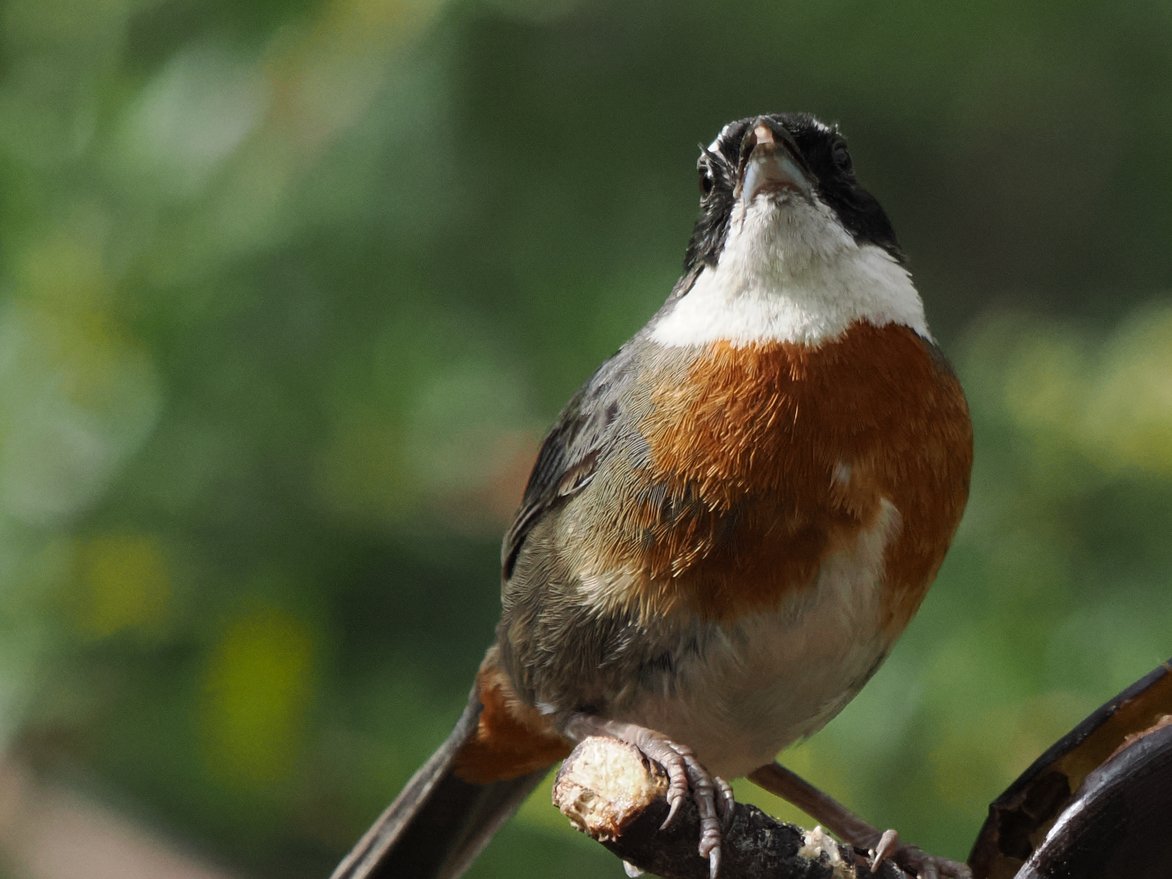
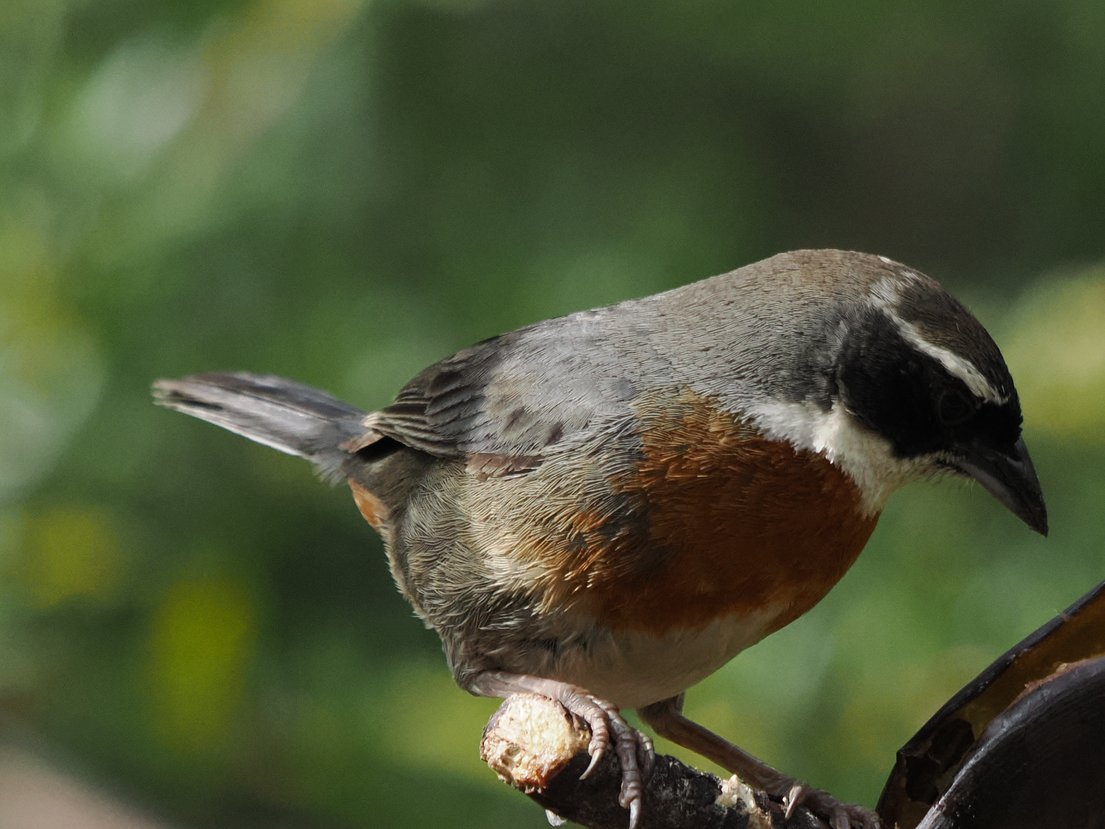
The Chestnut-breasted Mountain Finch has a distinctive appearance that makes identification relatively straightforward under good viewing conditions.
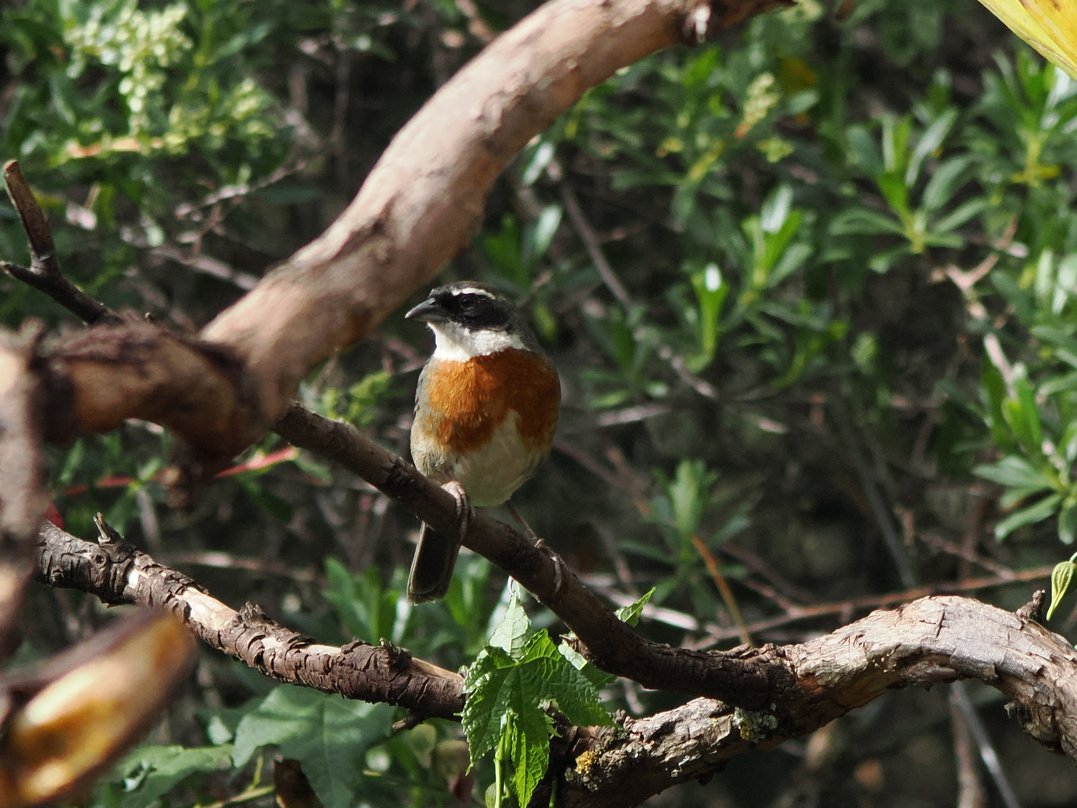
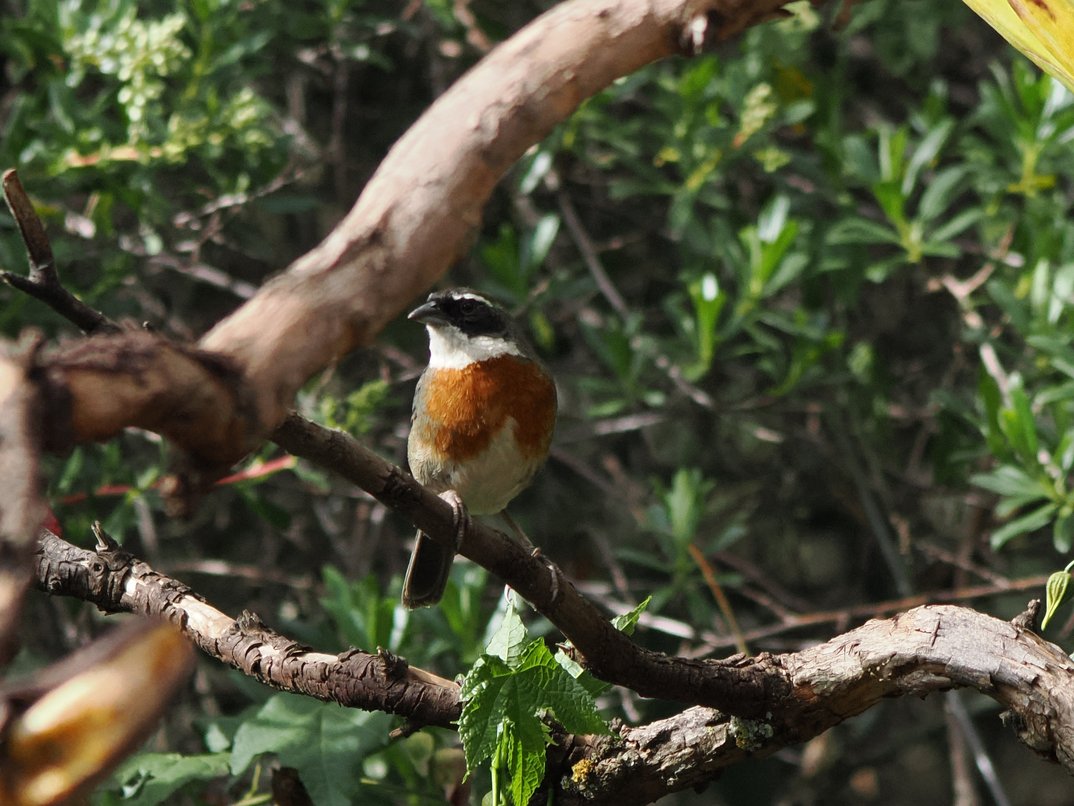
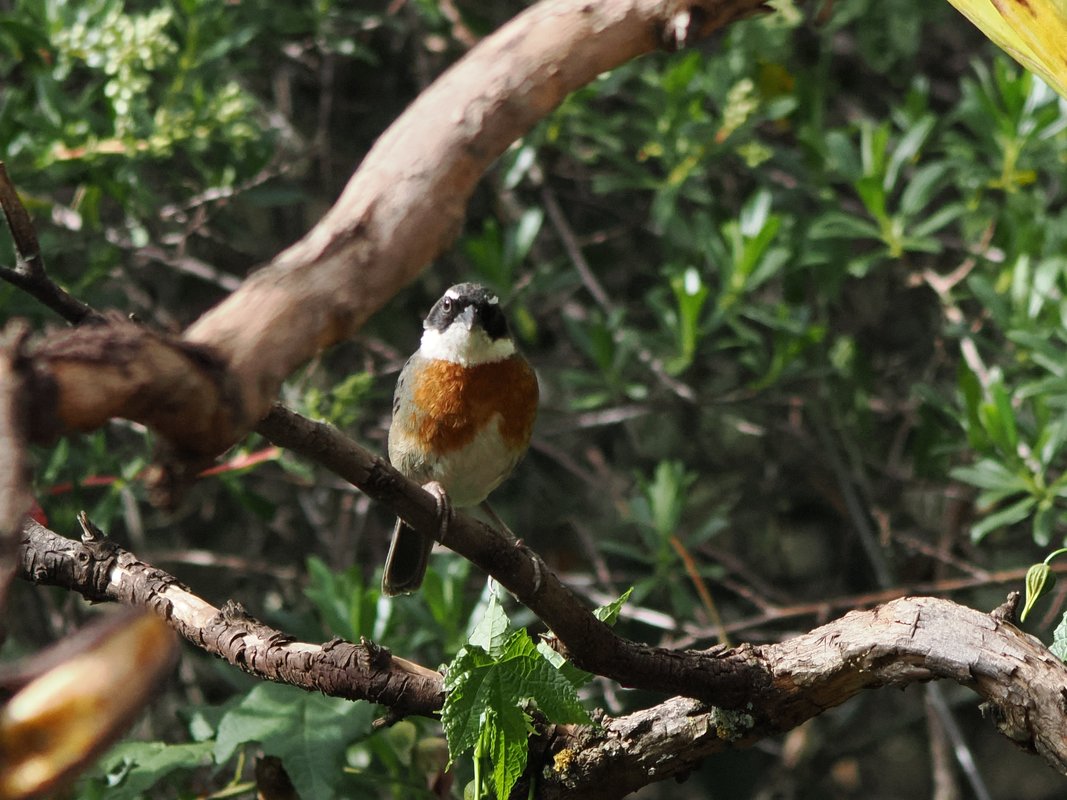
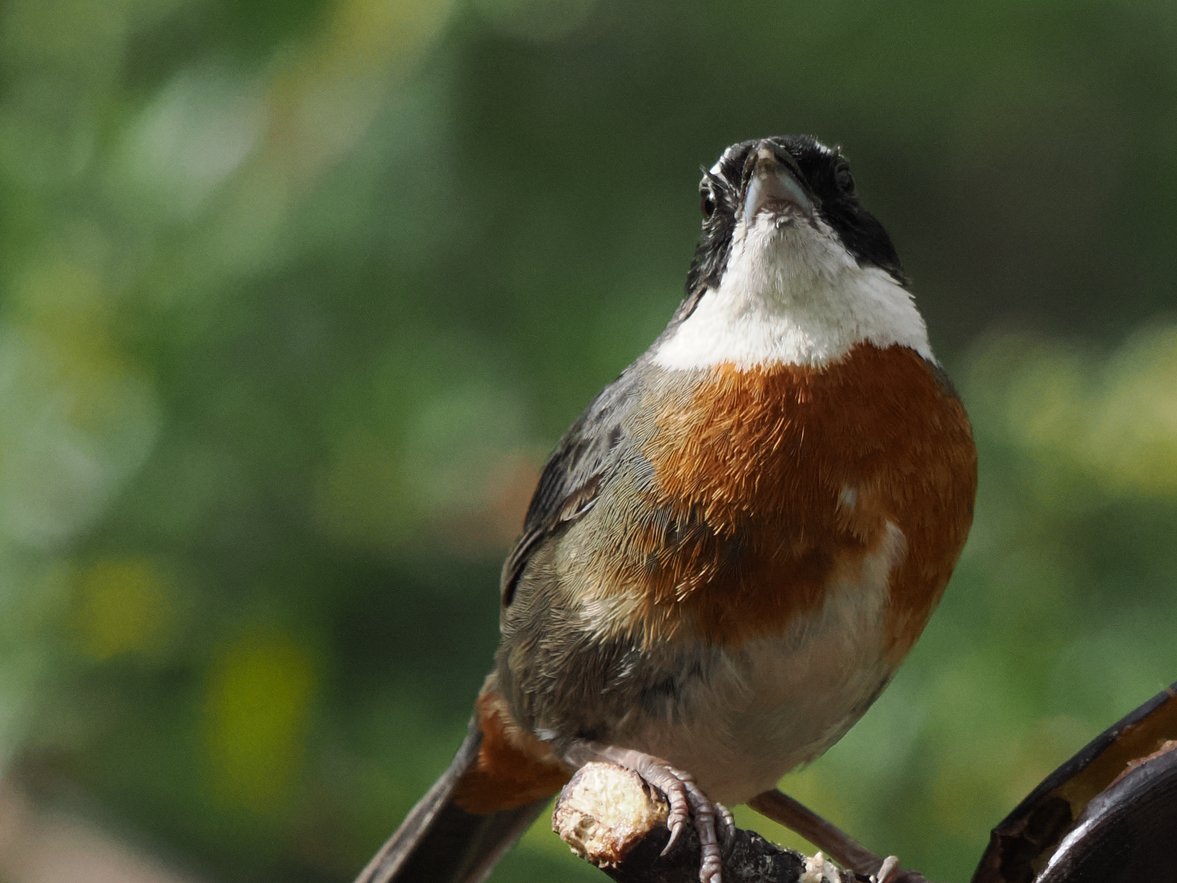
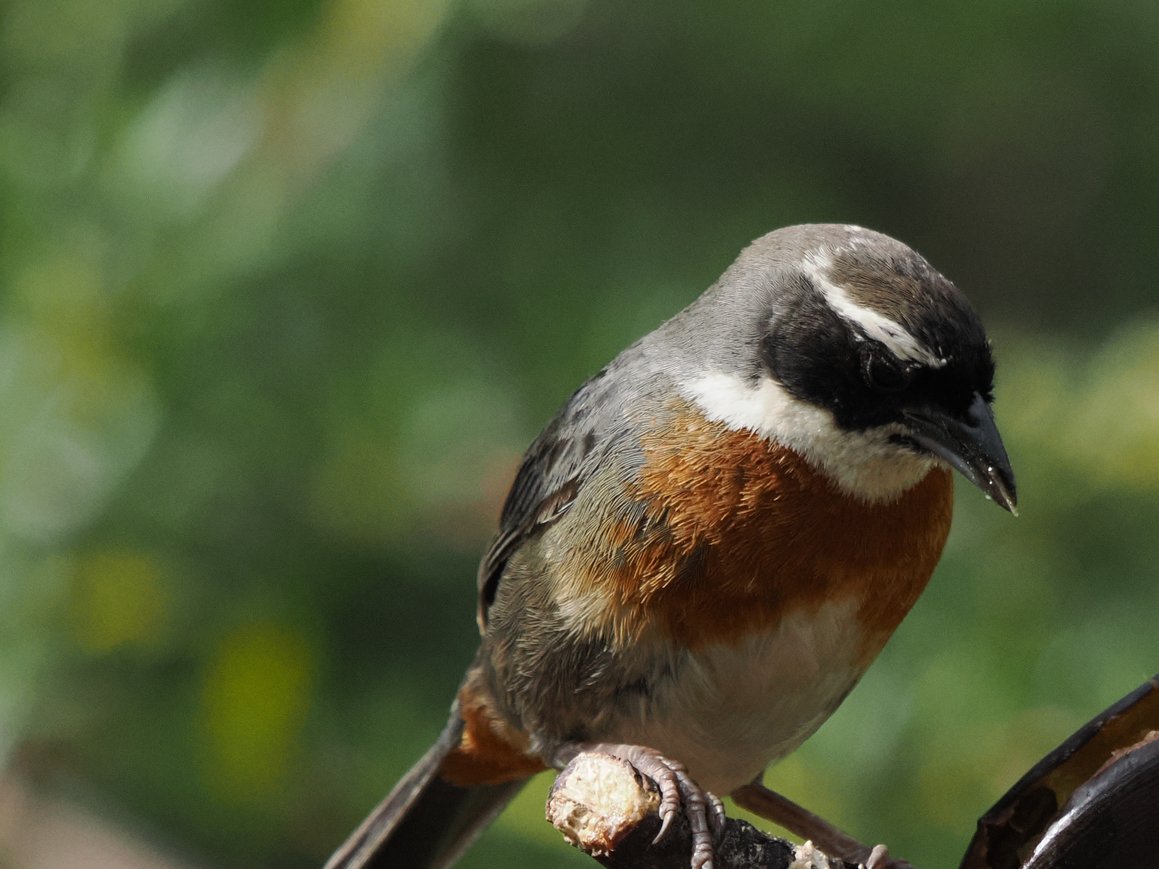
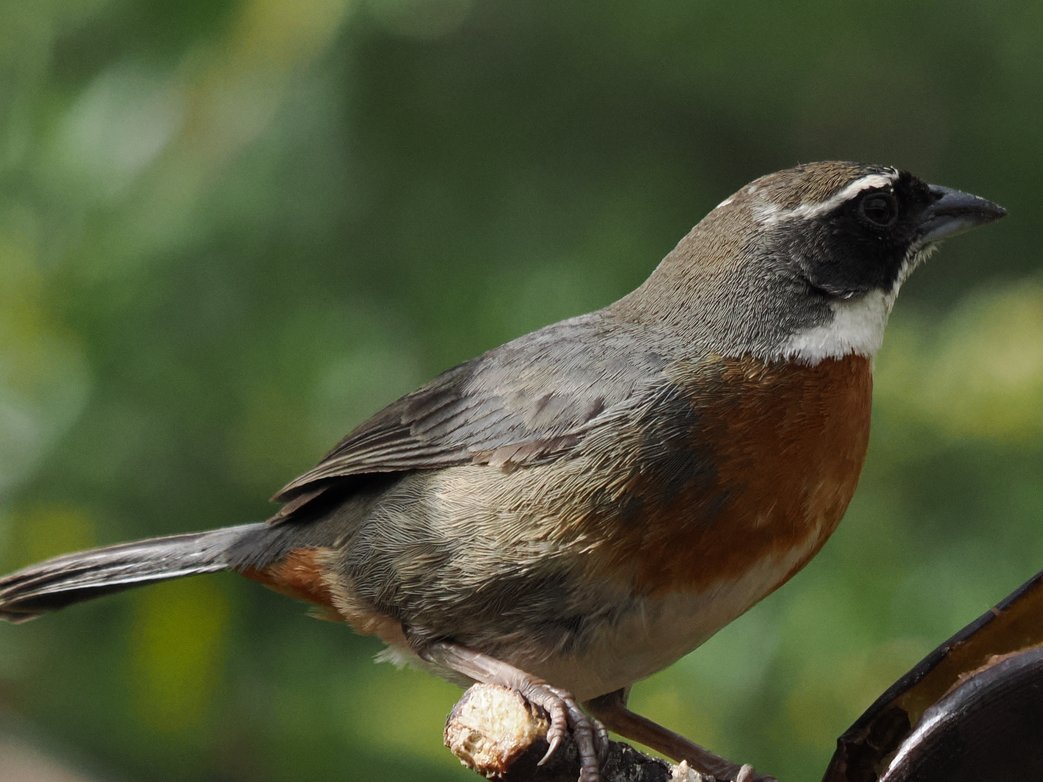
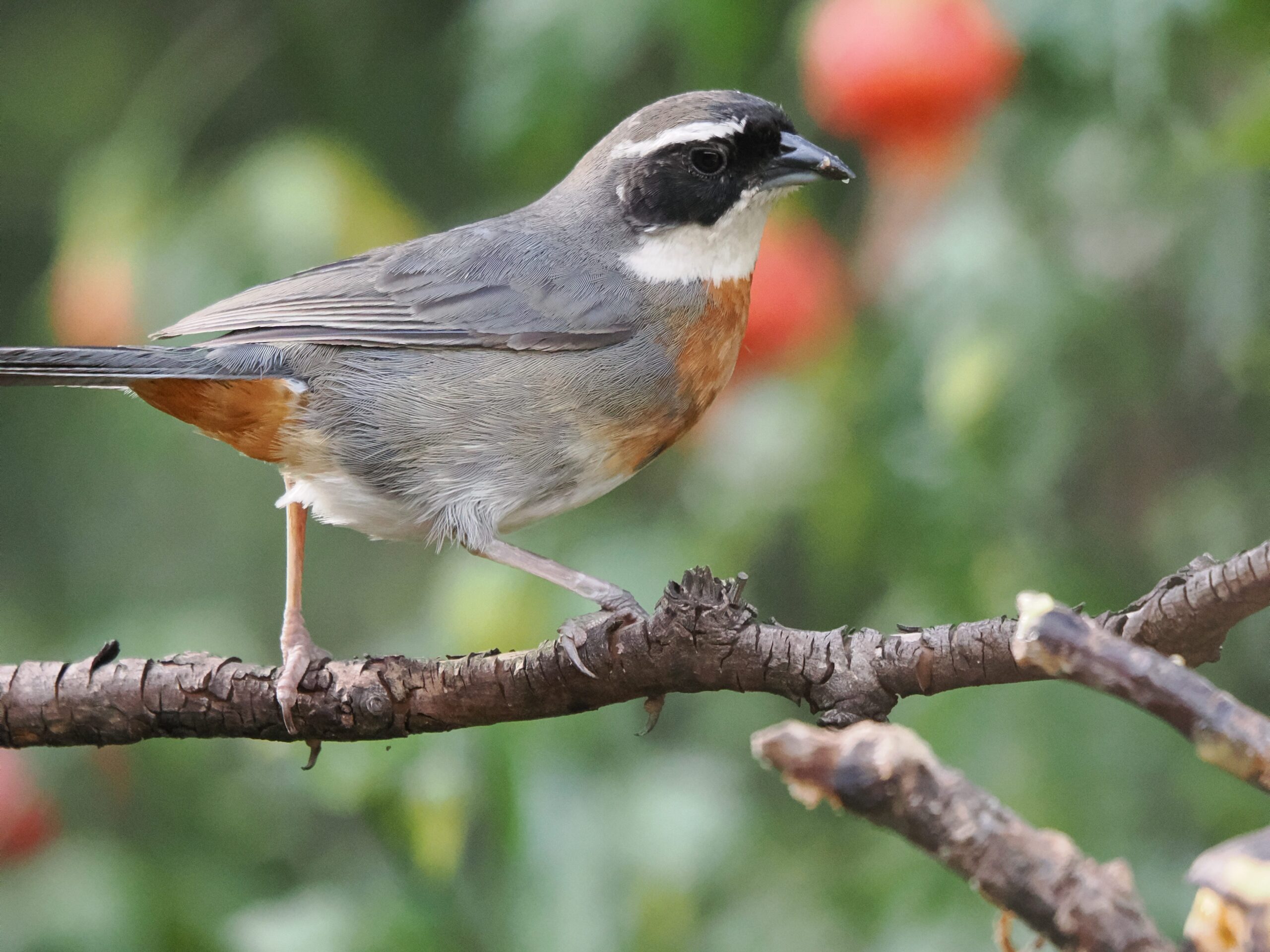
It measures approximately 16.5 centimeters in length and has predominantly gray upperparts, a conspicuous dark facial mask extending through the eyes, a clearly defined white supercilium, and a rich chestnut-colored breast patch that contrasts strongly with the white lower underparts.
This combination of gray, black, white, and chestnut creates a highly recognizable plumage pattern within its geographic range.
The chestnut patch on the breast is responsible for its English common name: Chestnut-breasted Mountain Finch.
Its Spanish name, Monterita Pechicastaña, similarly refers to this characteristic coloration.
For bird photographers, the species can be especially attractive because its contrasting facial pattern highlights the head and eye, while the chestnut breast creates strong visual separation when the bird perches on branches, rocks, or shrubs in the Andean landscape.
However, as with every wild bird, successful photography should always begin with responsible observation of its behavior and respect for an appropriate viewing distance.
A Bird of the Andean Shrublands
The habitat of the Chestnut-breasted Mountain Finch demonstrates why conservation should never focus exclusively on large forests.
This species is primarily associated with high-Andean shrublands, semi-open habitats, shrubby vegetation, montane scrub, and inter-Andean environments.
Most records place the species approximately between 2,500 and 3,900 meters above sea level, although the precise altitudinal range may vary slightly depending on the source and geographic area considered.
This ecological detail is extremely important.
When people hear the word “habitat,” they often imagine dense forest. Yet many bird species depend on open, semi-open, rocky, grassy, or shrub-dominated environments.
The Chestnut-breasted Mountain Finch reminds us that high-Andean shrublands are also ecologically valuable ecosystems.
A hillside covered with shrubs may appear less spectacular than a mature forest from a purely visual perspective. But for a species adapted to forage close to the ground and within low vegetation, this habitat may provide exactly the resources and structure it requires.
The indiscriminate removal of shrubs, simplification of vegetation, or transformation of these habitats can therefore affect species that depend directly on this ecological structure.
Effective conservation requires recognizing the importance of all habitat types, not only forests.
Foraging Close to the Ground and Among Shrubs
One of the characteristic behavioral traits of Poospizopsis caesar is its tendency to forage close to the ground and within the lower levels of shrubs.
Individuals may be observed alone or in pairs, moving discreetly through low vegetation while searching for food.
This foraging behavior provides an important lesson for habitat restoration and conservation management.
It is not enough simply to plant tall trees.
An ecosystem containing several vegetation strata provides a much greater diversity of ecological opportunities.
Low vegetation offers shelter.
Shrubs can produce seeds.
Leaves support small invertebrates.
The soil itself contains potential food resources.
Low branches provide perching sites from which birds can observe their surroundings and quickly escape from predators.
When a landscape is excessively simplified into lawns and scattered trees, much of this ecological complexity disappears.
By maintaining shrublands, herbaceous vegetation, leaf litter, native ground cover, and vegetation of different heights, we increase the number of ecological niches available to different species.
A Whistled Song That Helps Birders Find It
Bird identification is not based solely on visual characteristics.
In many cases, we hear a bird before we see it.
The Chestnut-breasted Mountain Finch produces a distinctive whistled song that can help observers locate the bird within dense shrubs where its plumage may be partially concealed.
Learning bird vocalizations completely transforms the birdwatching experience.
Someone who observes only with their eyes may unknowingly walk past numerous species.
A person who learns to listen begins to discover an entirely different landscape.
Every whistle, call, or song may reveal the presence of an individual, territorial behavior, communication, or other aspects of avian ecology.
For environmental education and birdwatching projects, this acoustic dimension deserves increasing attention.
We should not teach people only how to watch birds.
We should also teach them how to listen to ecosystems.
A Species Scientifically Described in Cusco in the Nineteenth Century
The scientific history of Poospizopsis caesar is deeply connected with Cusco.
The species was formally described in 1869 by British zoologists and ornithologists Philip Lutley Sclater and Osbert Salvin.
It was originally described as Poospiza caesar, and its type locality was established at Tinta, Cusco, Peru.
This historical detail has considerable scientific and cultural significance.
Cusco is therefore not only part of the species’ current geographic distribution; it is also directly connected with the history of its formal scientific description.
When a birdwatcher photographs a Chestnut-breasted Mountain Finch in the Cusco Andes today, they are observing a species that entered the scientific literature more than a century and a half ago based on material associated with this same region.
This connection between natural history, geography, taxonomy, and scientific research deserves greater recognition.
Cusco possesses an extraordinary archaeological history, but it also has a fascinating natural-history legacy that can become an increasingly important part of the region’s tourism and environmental-education narrative.
Why Was It Previously Known as Poospiza caesar?
One issue that can cause confusion when researching this species is its change of genus.
For many years it appeared in field guides, scientific publications, and checklists as Poospiza caesar.
Today the widely accepted scientific name is Poospizopsis caesar.
This taxonomic change was not simply cosmetic.
Modern avian classification increasingly incorporates molecular and genetic evidence to investigate evolutionary relationships between species.
Phylogenetic studies demonstrated that the traditional genus Poospiza contained species that did not form a single natural evolutionary lineage.
Subsequent taxonomic revisions restored the genus Poospizopsis for caesar and its close relatives.
This provides an excellent example for environmental and scientific education.
Science is not a collection of immutable names.
Scientific classification changes when new evidence becomes available.
For decades, ornithologists may use one classification, and later molecular analyses can demonstrate that evolutionary relationships are different from what was previously understood.
This is how ornithology, systematics, and taxonomy continue to advance.
A “Finch” That Is Actually a Tanager
There is another interesting taxonomic detail.
Although its English common name contains the word “finch,” Poospizopsis caesar is currently classified within the family Thraupidae, the large and extraordinarily diverse family of Neotropical tanagers.
Common names do not always accurately reflect modern evolutionary relationships.
Many bird names originated before molecular techniques and detailed phylogenetic studies were available.
Consequently, a bird called a “finch” in English may be evolutionarily more closely related to tanagers than to the true finches of other avian families.
Although this distinction may initially seem highly technical, it provides an excellent opportunity to demonstrate that biodiversity is considerably more complex than common names alone suggest.
Is the Chestnut-breasted Mountain Finch Threatened?
The Chestnut-breasted Mountain Finch is currently regarded as a species of Least Concern at the global conservation level.
However, being classified as Least Concern does not mean that its habitats no longer require protection.
This distinction is fundamental in environmental education.
Conservation categories are assessments based on specific global or regional criteria. They do not mean that every local population is automatically secure, nor do they imply that habitat can be transformed without ecological consequences.
For an endemic species, there is an additional responsibility.
Its entire global population occurs within the country or region to which it is restricted.
If its natural range is concentrated in Peru, responsibility for maintaining suitable ecosystems for the species also falls primarily within Peru.
Protecting Andean shrublands, ecological corridors, ravines, high-elevation vegetation, and connected habitats therefore contributes directly to protecting the future of this species.
The Chestnut-breasted Mountain Finch as a Symbol of Natural Cusco
Some species have the potential to represent entire territories.
Not necessarily because they are the largest or most famous, but because they tell a distinctive ecological and historical story.
Poospizopsis caesar has that potential for Cusco.
It is endemic to Peru.
It is closely associated with high-Andean landscapes.
Its scientific history is directly connected with Tinta, Cusco.
It is attractive to birdwatchers and wildlife photographers.
And it provides an opportunity to explain the ecological importance of habitats that often receive less public attention than forests or wetlands.
Together, these characteristics make it an excellent ambassador for the concept of Natural Cusco.
For decades, Cusco’s international promotion has focused primarily on its exceptional cultural heritage.
The future offers the opportunity to develop a much broader narrative.
A traveler can visit Machu Picchu and also search for endemic birds.
They can explore the Sacred Valley while learning about high-Andean shrubland ecosystems.
They can photograph extraordinary Inca architecture and, only a few hours later, photograph a bird species found naturally nowhere outside Peru.
Culture and biodiversity do not compete.
They complement one another.
The Opportunity for Birdwatching Tourism
The Chestnut-breasted Mountain Finch also has considerable potential from the perspective of specialized bird tourism and avitourism.
International birdwatchers often organize their journeys around difficult-to-find, endemic, range-restricted, or habitat-specialist species.
A bird found only within part of Peru can provide an additional reason for visitors to remain longer in the region.
However, the true conservation value of bird tourism appears when this interest generates economic benefits that are compatible with habitat protection.
A birdwatcher may require a professional birding guide.
They may require transportation.
They may stay in local accommodation.
They purchase food and other services.
They may pay entrance fees to a reserve, sanctuary, or bird observatory.
Wildlife photographers may require specialized photographic services.
When this income helps landowners, conservation initiatives, and local communities maintain native vegetation and biodiversity, a different economic incentive begins to emerge.
A living bird generates value precisely because it continues to live within a healthy ecosystem.
This is one of the strongest arguments in favor of responsible nature tourism.
Photography, Environmental Education, and Conservation
A photograph of the Chestnut-breasted Mountain Finch can be beautiful.
But its greatest potential emerges when the image is accompanied by a story.
If we show only a photograph, we may generate admiration.
If we explain that it is an endemic bird of Peru, we generate knowledge.
If we explain its relationship with high-Andean shrublands, we generate understanding.
If we demonstrate that these habitats require protection, we generate conservation awareness.
And if we invite people to observe the species responsibly, we can generate participation.
This process summarizes a fundamental idea for Pachacútec Bosque Andino and for conservation more broadly:
A single species can become a gateway to understanding an entire ecosystem.
A Species That Encourages Us to See Andean Shrublands Differently
Perhaps one of the greatest lessons offered by Poospizopsis caesar is this:
Not all conservation takes place inside spectacular forests.
A small shrubland can be important.
A rocky hillside can be important.
A ravine can be important.
A high-elevation garden can be important.
A strip of native vegetation connecting two transformed areas may function as a refuge or ecological corridor.
Wildlife uses habitats that human perception often considers insignificant.
Learning about the ecological requirements of individual species therefore changes the way we interpret landscapes.
What appears to be “weeds” may actually provide protective cover.
What appears to be an insignificant shrub may produce food.
What appears to be empty ground may form part of a bird’s feeding or territorial habitat.
Conservation often begins by changing the way we see the landscape.
Pachacútec Bosque Andino and the Importance of Endemic Birds
At Pachacútec Bosque Andino, species such as the Chestnut-breasted Mountain Finch help demonstrate that restoration and conservation of Andean landscapes should not focus exclusively on hummingbirds.
Hummingbirds are extraordinary ambassadors for nature and among the major protagonists of the observatory, but around them exists a much broader avian community that also depends on trees, shrubs, seeds, insects, soil, flowers, and open habitats.
Every new bird species we record helps us understand a different component of the ecosystem.
Some species depend heavily on nectar.
Others forage for insects.
Some feed close to the ground.
Others depend on fruits or seeds.
The diversity of birds therefore also reflects the diversity of ecological resources and vegetation structures available within a landscape.
For this reason, ecological restoration should seek structural and biological complexity.
We do not simply want to create an attractive garden.
We want to restore a functioning habitat capable of supporting different forms of life.
An Invitation to Know Nature Before Trying to Conserve It
The Chestnut-breasted Mountain Finch may never achieve the worldwide fame of the Andean Condor.
But it does not need to be famous to be extraordinary.
It represents an evolutionary history restricted to a particular region.
A scientific history formally connected with Cusco since the nineteenth century.
A story of adaptation to high elevations.
A story of Andean shrublands.
And an opportunity for residents and visitors to southern Peru to understand that unique species can exist almost beside the roads and trails we use every day.
This is precisely what conservation needs.
To make visible what previously went unnoticed.
To name it.
To observe it.
To photograph it responsibly.
To study it.
To tell its story.
And to understand what it requires in order to continue existing.
The Chestnut-breasted Mountain Finch (Poospizopsis caesar) represents only a small part of Peru’s immense natural heritage, but its endemic status reminds us of something fundamental:
If this species disappears from Peru, it disappears from the planet.
For that reason, every conserved Andean shrubland, every protected high-elevation landscape, every scientific study, every bird record, and every visitor who learns to observe this species responsibly acquires much greater significance.
Getting to know this bird is not simply about learning the name of a species. It is about discovering a part of Peru that exists nowhere else in the world.