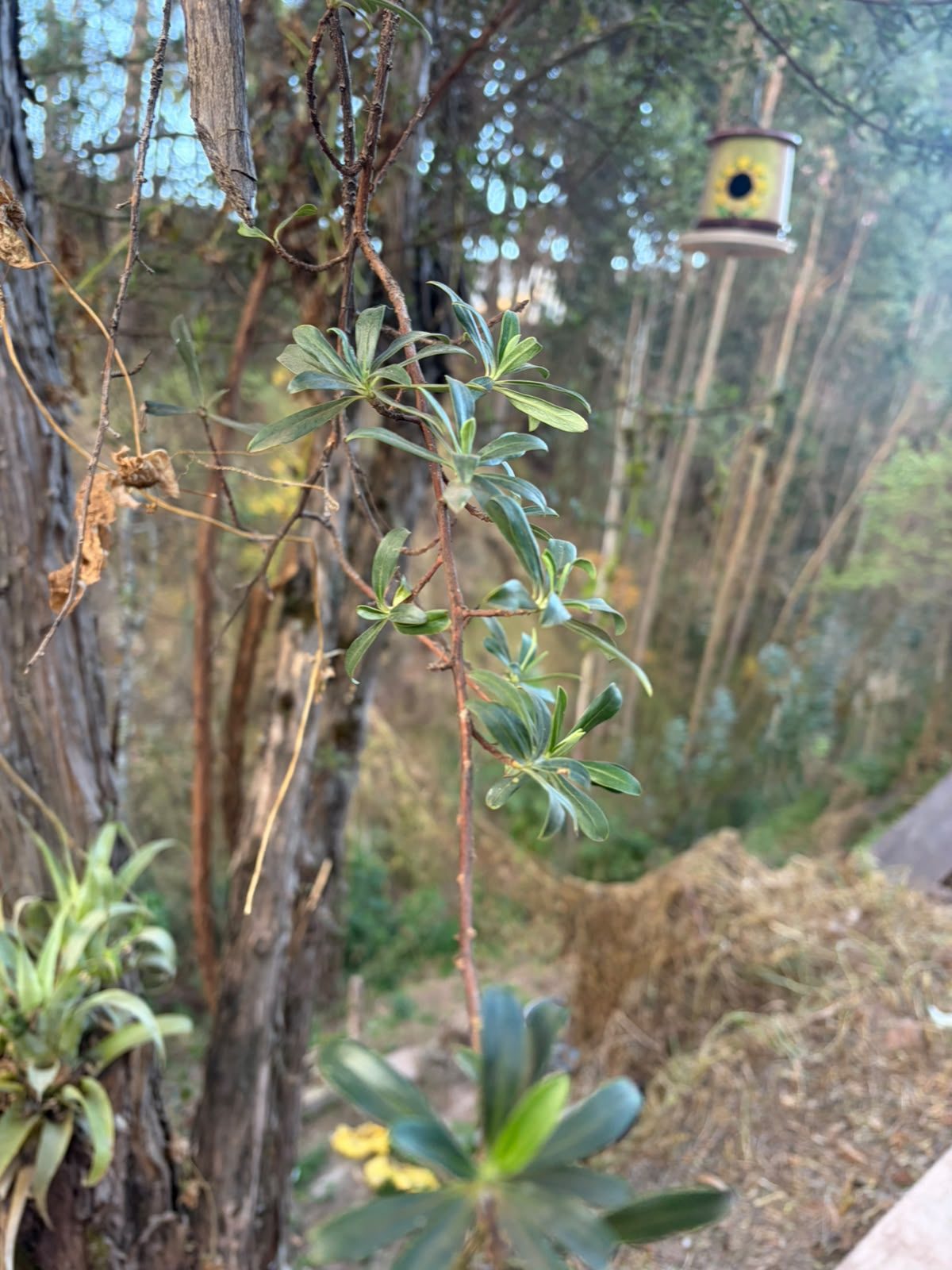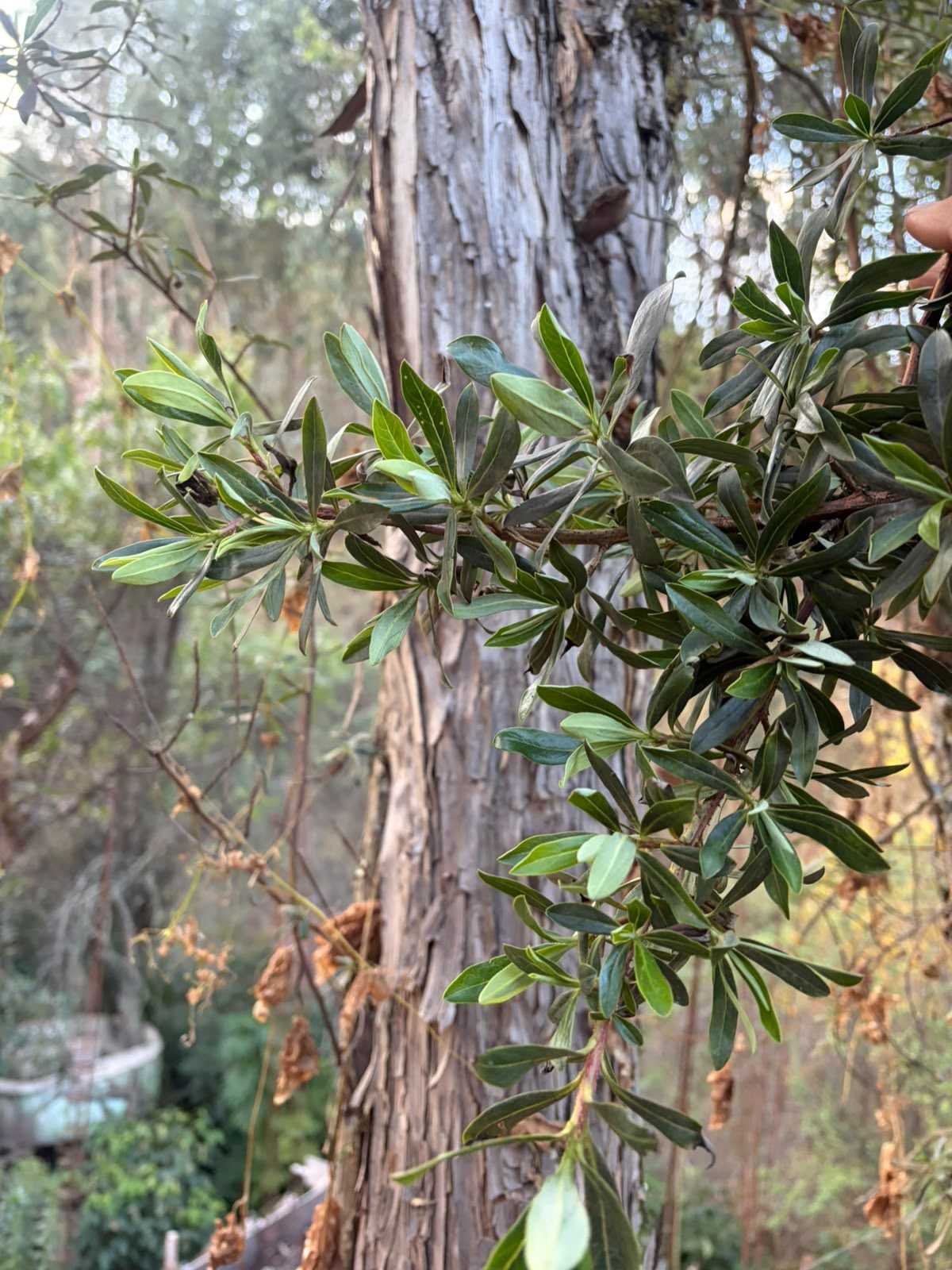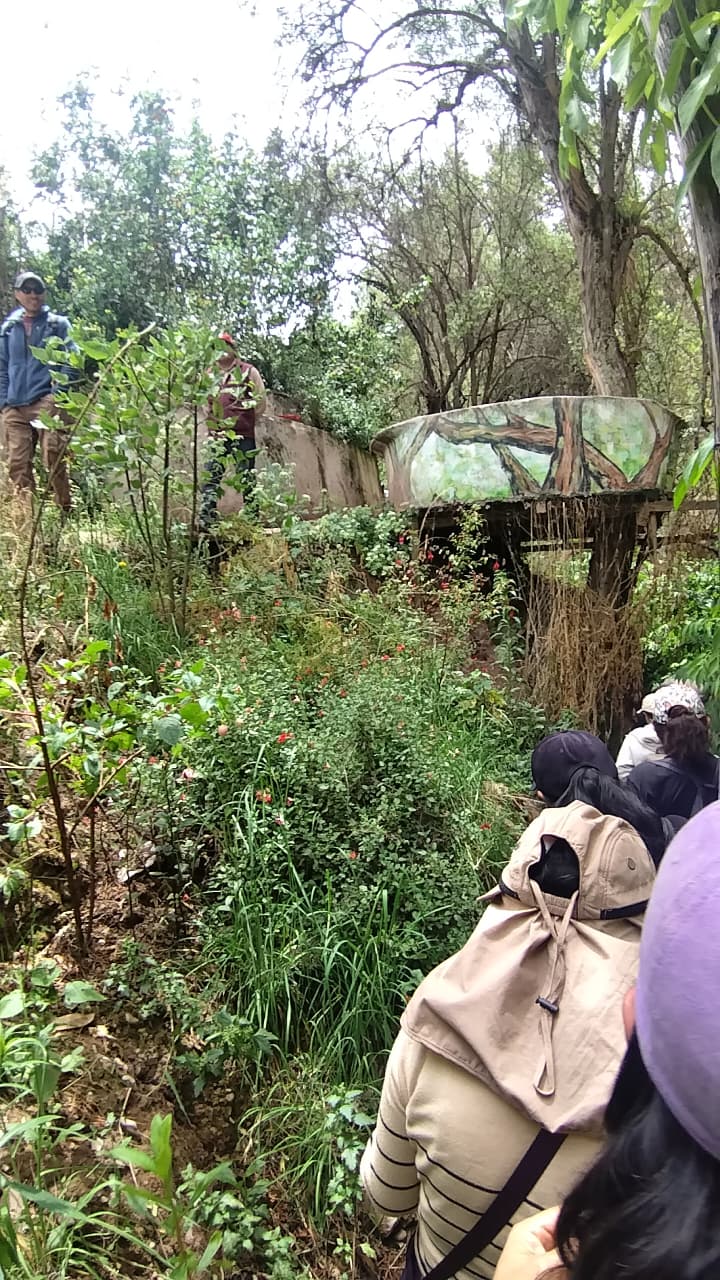
ESCALLONIA THE FORGOTTEN TREES OF THE ANDES: THE LIVING MEMORY OF THE HIGH-ANDEAN FOREST
Why an Old Chachacomo Can Be as Important as a Great National Park
There are trees that dominate the landscape, and there are trees that sustain the landscape without drawing much attention. The former often appear on postcards, in tourism campaigns, and in official speeches. The latter survive in ravines, slopes, forest remnants, and small inter-Andean valleys, performing decisive functions for the life of birds, insects, soils, and watercourses, although they rarely become national symbols.
The genus Escallonia belongs to this second group: plants that may seem discreet to the general public, but are fundamental for understanding the ecological history of the Andes and the possibility of restoring them.
In South America, speaking about Escallonia means speaking about a plant lineage deeply linked to the mountains. These are shrubs and small trees that, over millions of years, diversified along the Andean backbone, colonizing gradients of altitude, humidity, temperature, and exposure. Their history is not only taxonomic. It is also a story of climate, geographic isolation, fragmented forests, firewood, erosion, birds, and resilience.
Today, we know that Escallonia is a diverse Neotropical genus, mainly South American, whose current richness is around 39 species recognized in recent analyses. However, historical literature and some broader compilations have used considerably higher figures, even exceeding one hundred taxa when synonyms, varieties, unresolved complexes, or older delimitations are included. The most modern phylogenetic and biogeographic studies agree that the center of diversity of the genus lies in the Andes, and that its evolution has been closely tied to the history of the South American mountains.
Within this botanical universe, two species are especially important for the Peruvian Andes and for any serious conversation about high-Andean forest restoration: Escallonia resinosa and Escallonia myrtilloides.
The first, E. resinosa, associated with inter-Andean valleys and dry or subhumid high-Andean environments, is known in several regions as chachacomo and has historically been used as firewood, timber, and a local resource. The second, E. myrtilloides, linked to more humid montane shrublands and forests, reaches extreme elevations in the Andes and has begun to reveal something fascinating: its growth rings preserve a climatic memory that can help us reconstruct the environmental past of the Peruvian mountains.
This article is an invitation to look at Escallonia differently. Not as a simple herbarium entry, nor as a minor tree of the Andean landscape, but as a strategic component of high-Andean biodiversity. A plant that helps explain how mountain forests were formed, why they are being lost, which birds depend on them, and why projects such as Pachacútec Bosque Andino should consider Escallonia among their priority restoration species.
1. A MOUNTAIN LINEAGE
What Is Escallonia?
Escallonia is a genus of shrubs and small trees belonging to the family Escalloniaceae, widely distributed in South America and closely associated with montane environments. According to recent phylogenetic analyses and biogeographic synthesis studies, most of its species are concentrated along the Andes, from the tropical north to the temperate southern extremes of Chile and Argentina, with a presence also in other South American regions and in the Juan Fernández Archipelago.
From an evolutionary perspective, Escallonia is especially interesting because it appears to have diversified along mountain ecological gradients: changes in temperature, precipitation, seasonality, elevation, and topographic isolation. In other words, its history helps tell the history of the Andes.
Federico Zapata’s work on the phylogeny of the genus was decisive in understanding this pattern. Based on molecular and bioclimatic evidence, he showed that Escallonia is a monophyletic group with a strong geographic and climatic structure, probably originating in the tropical Andes and later diversifying across the mountain range and into the temperate environments of the south.
More recently, studies on climatic niche conservation in Escallonia reinforced this idea: the genus appears to have arisen under tropical or warm montane conditions and, from there, colonized new climatic regimes, including colder and temperate environments. This transition makes Escallonia a very interesting model for studying how Andean plants respond to climate change and elevation.
Not One Escallonia, but Many Mountains within a Genus
Speaking about Escallonia in the singular is useful for introducing the subject, but misleading if one wants to understand its real ecology. The genus includes species from dry inter-Andean valleys, humid shrublands, montane forest edges, cloud forests, puna ecotones, and temperate environments of the Southern Cone. This diversity explains why the number of species has varied historically depending on authors, taxonomic approaches, and regions studied.
Among the species frequently cited in South American literature and group reviews are E. angustifolia, E. herrerae, E. hypoglauca, E. micrantha, E. millegrana, E. myrtilloides, E. paniculata, E. pendula, E. piurensis, E. poasana, E. resinosa, E. schereiteri, and E. tucumanensis, among others. The taxonomic revision of Escallonia in Argentina by Sede and Denham shows precisely how much detail is required to separate species, review herbarium material, resolve synonyms, and understand regional morphological variation.
This taxonomic revision is not an academic luxury: it has direct consequences for conservation. If we do not clearly know which species we have in front of us, where one species begins and another ends, or what its ecological limits are, it is impossible to properly restore a forest, evaluate its rarity, or design management strategies.
2. THE GEOGRAPHY OF AN ANDEAN TREE
From Central America to Tierra del Fuego
In a broad sense, the distribution of the genus Escallonia covers much of the montane axis of South America. Modern biogeographic analyses describe it as a mainly Andean genus, extending from Panama / Costa Rica to Tierra del Fuego, with a presence in Chile, Argentina, Bolivia, Peru, Ecuador, Colombia, and some representatives or related lineages in other regions of the continent and in Juan Fernández.
This latitudinal breadth is remarkable. It means that the genus has been able to persist and diversify from tropical montane forests to southern temperate environments, crossing an enormous climatic mosaic. Few plant groups allow us to observe so clearly how a single evolutionary lineage “stretches” across such a wide gradient.
But in ecological terms, the heart of the genus lies in the mountains: on slopes, high valleys, ravines, and transitions between forest and shrubland. There, Escallonia does not merely occupy space; it structures habitat.
The Andes as an Engine of Speciation
The Andes are not merely the setting of Escallonia’s history. They are one of its main evolutionary engines.
Andean uplift created barriers, microclimates, altitudinal belts, and isolated valleys that favored the differentiation of plant populations. An ancestral lineage could have split when one population became isolated in a dry inter-Andean valley, another climbed into a colder shrubland, and another became trapped in a cloud forest. Over time, these populations accumulated morphological, ecological, and genetic differences until they became distinct species.
The analyses by Zapata and later studies support precisely this idea: geography and climate played a central role in the early and recent diversification of Escallonia.
This explains why certain species have relatively restricted distributions and why others occupy highly specific environments. It also explains why the inter-Andean valleys of Peru and Bolivia are so important: they function as natural laboratories of isolation, adaptation, and endemism.
3. ESCALLONIA RESINOSA: THE CHACHACOMO OF THE INTER-ANDEAN VALLEYS
A High-Elevation Tree
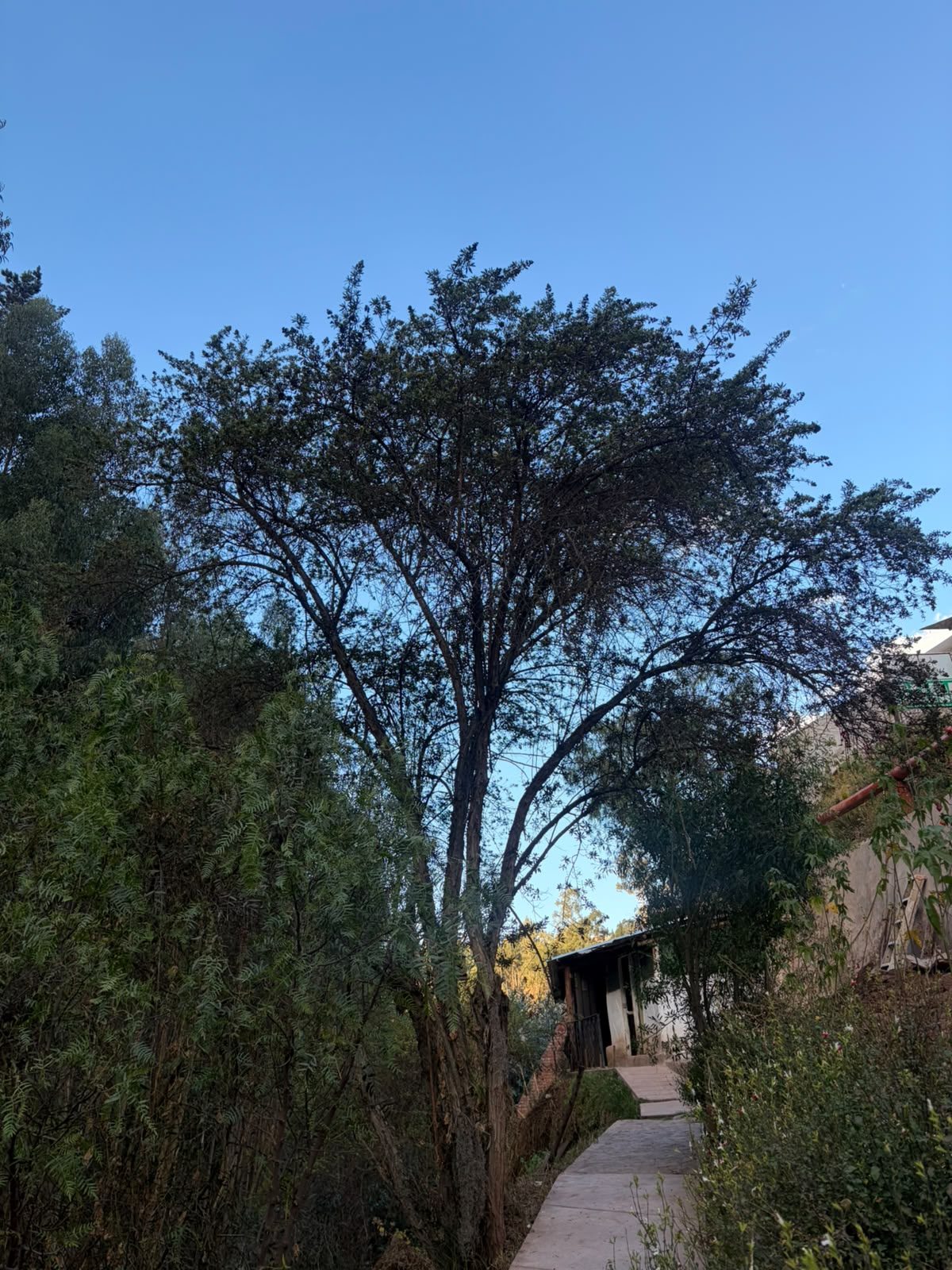
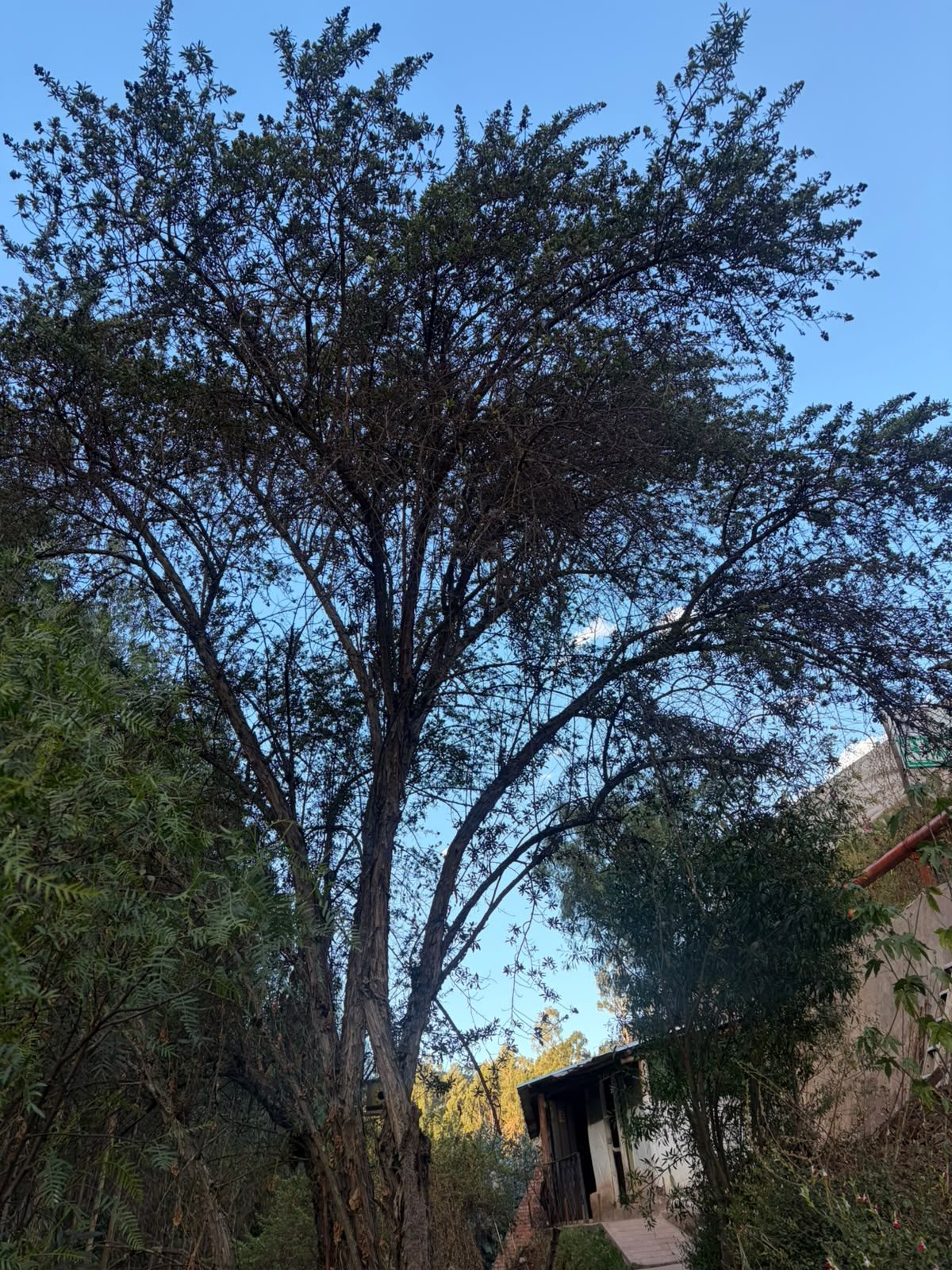
Among the most emblematic species for Peru is Escallonia resinosa. Associated with inter-Andean valleys and high-Andean environments, this species can be found at elevations above 4,000 meters and, according to field reports and regional literature, may reach or approach 4,200 meters above sea level in some areas.
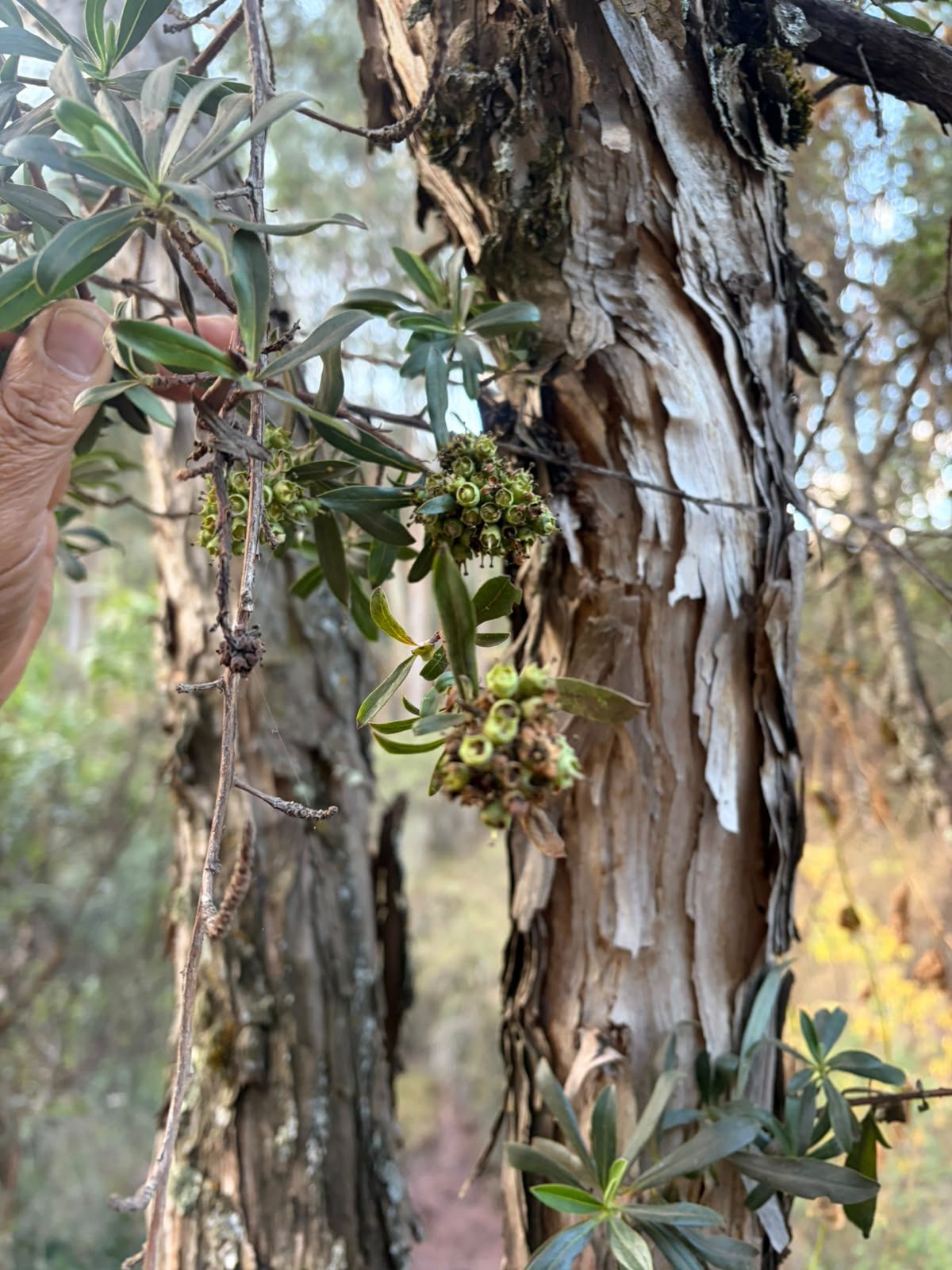
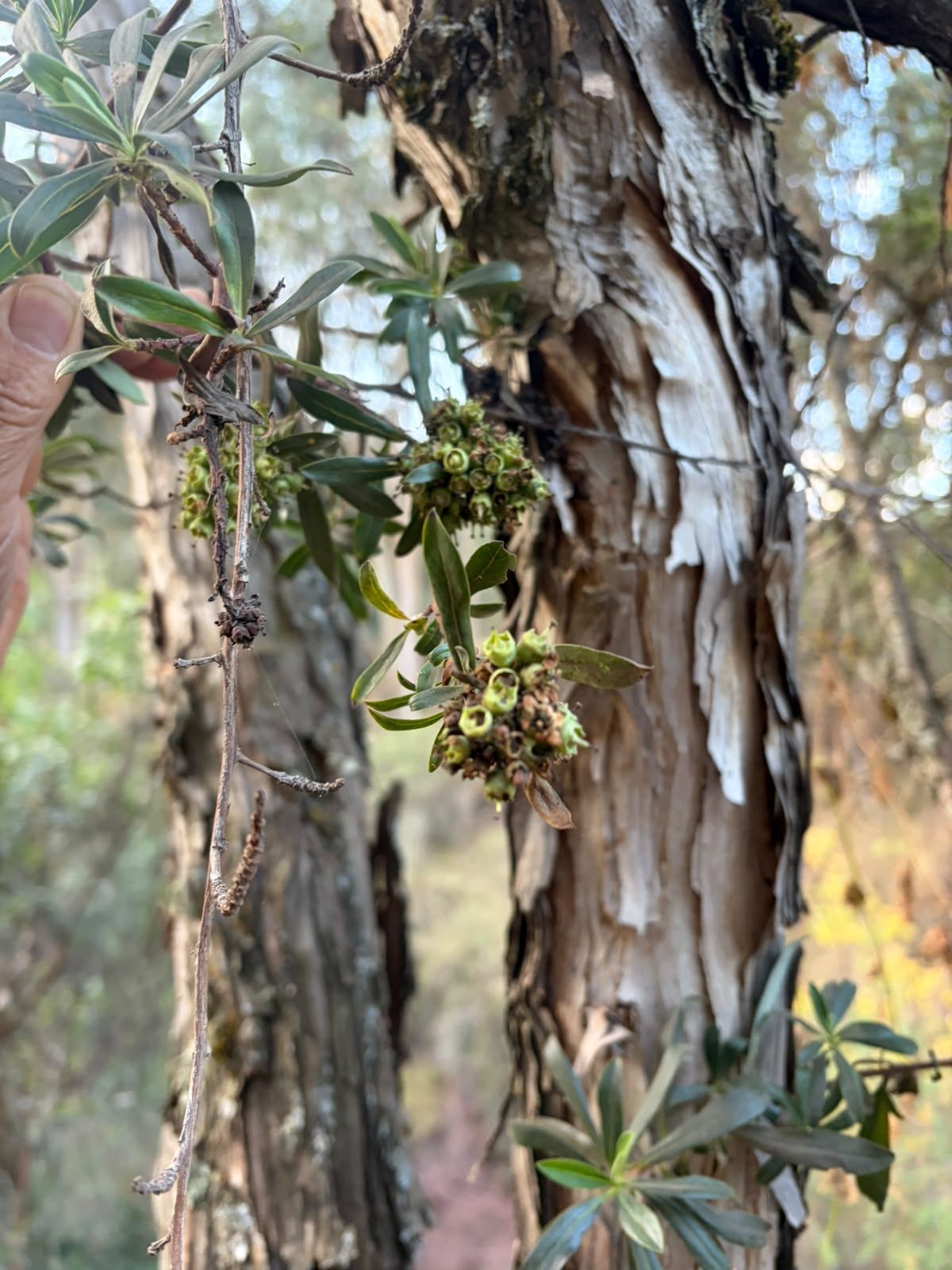
In several regions of southern Peru and Bolivia, E. resinosa is known as chachacomo, a name that in local speech is often also applied to other Andean hardwood trees, so common names must be used very carefully. From a botanical point of view, what matters is that E. resinosa represents a life form especially valuable for dry and semidry Andes: a tree or small tree capable of surviving in poor soils, exposed slopes, frosts, and marked seasonality.
Wood, Firewood, and Threat
Precisely because it is resistant and useful, E. resinosa has historically been exploited. In many high-Andean regions, slow-growing trees are used as firewood, posts, tools, fences, or local timber. The problem is that species such as Escallonia resinosa do not regenerate as quickly as opportunistic shrubs. They may take decades to reach a functional size within the ecosystem and centuries to become mature or relict trees.
When extraction becomes intense and there is insufficient regeneration, the result is predictable: large individuals decline, populations become fragmented, forest structure becomes impoverished, and habitat for associated fauna is lost.
This pattern is not exclusive to Escallonia. It has occurred with Polylepis, with Buddleja, with several high-Andean forest remnants, and with numerous trees used as fuel in rural areas. But in the case of E. resinosa, the threat is especially delicate because it is a component of forests and shrublands that are already scarce and fragmented.
The Invisible Giants
One of the most striking pieces of information appearing in field testimonies and in the memory of Andean botanists is the existence of giant relict individuals, with diameters at breast height that are extraordinary for the high-Andean context. The mention of a specimen with 150 cm DBH and a potential age on the order of centuries—even close to 800 years in field estimates or ecological inferences—cannot be taken lightly. It would require rigorous dating or at least dendrochronological or anatomical evaluation to be stated with precision, but as a biological hypothesis it is entirely plausible in slow-growing and long-lived Andean trees.
If this is confirmed in certain relics of Escallonia resinosa or related species, we would be facing true ecological archives of the Andes: trees that began growing long before the Peruvian republic, perhaps before the collapse of Tawantinsuyo, and that have survived climatic changes, grazing, fires, logging, and human expansion.
Such a tree is not merely an individual. It is a biological monument.
4. ESCALLONIA MYRTILLOIDES: A CHRONICLER OF THE HIGH-ANDEAN CLIMATE
A Species of Extreme Elevation
If E. resinosa represents the useful and resistant tree of the inter-Andean valleys, Escallonia myrtilloides represents another face of the genus: a high-Andean species associated with shrublands, montane forests, and humid puna transitions, capable of living near the upper limit of the forest.
For a long time, it was assumed that many tropical Andean species were not ideal for growth-ring studies because of the apparent lack of marked seasonality in some environments. But that idea has been changing. In the central Andes of Peru, the work of Requena-Rojas, Amoroso, Ticse-Otarola, and Crispín-Delacruz demonstrated that Escallonia myrtilloides can indeed produce distinguishable rings useful for dendrochronological reconstruction.
Why This Matters
Dendrochronology—the study of tree growth rings—allows us to reconstruct climate variability, droughts, wet years, disturbances, and even forest responses to environmental change. In temperate regions, this is a classic tool. In mountain tropics, however, it remains an expanding field.
The study of E. myrtilloides is important for several reasons:
- It opens a methodological door to using Peruvian high-Andean trees as climate archives.
- It expands the range of Andean species useful for dendroecology, beyond the genera traditionally studied.
- It confirms that certain puna and high-Andean forest trees do record an annual signal in their wood.
- It strengthens the idea that Andean forests are laboratories of climate change, not merely scenic landscapes.
The work of Requena-Rojas and colleagues found that E. myrtilloides presents rings defined by specific anatomical traits and can be used to generate growth chronologies in the central Andes of Peru.
In simpler terms: these trees preserve memory.
A Tree That Remembers the Rain
Each ring is, in a sense, a season written in wood. A wetter year may leave a mark different from that of a dry year. A cold period or a disturbance may alter the growth pattern. In a context of global warming, loss of forest cover, and transformation of the Andean water regime, this information is extremely valuable.
High-Andean forests need protection not only as habitats; they are also archives of regional climate. Losing a centennial Escallonia myrtilloides does not only mean losing shade or biomass. It means losing a library.
5. ESCALLONIA FORESTS AS BIRD HABITAT
More Than Trees: Structure for Life
The ecological importance of Escallonia is not limited to its taxonomy or its dendrochronological value. Its most visible role in the Andean landscape may be another one: creating habitat.
A forest or shrubland dominated by Escallonia species provides:
- vegetation stratification for insectivorous and frugivorous birds,
- dense branching for refuge and nesting,
- flowers that may be used by pollinators,
- microhabitats for arthropods,
- shade and moisture retention in the understory,
- perches for territorial and singing birds.
In other words, an Escallonia is not just a plant; it is a small ecological architecture.
250 Bird Species? A Careful Interpretation
Your synopsis mentions “home to 250 birds.” That number must be handled rigorously. It would be difficult to support the claim that a single species of Escallonia hosts 250 bird species by itself. What is plausible—and scientifically defensible—is that landscapes, forest remnants, or vegetation mosaics where Escallonia is dominant or important may form part of territories used by a high richness of Andean birds, especially when considered at landscape or regional scales.
In inter-Andean forests and high-Andean mosaics of southern Peru, Bolivia, or Ecuador, accumulated bird richness can be very high, and the presence of trees such as Escallonia, Polylepis, Buddleja, Gynoxys, and other native species helps sustain that diversity. The key is not to exaggerate the statement: it is not “Escallonia alone supports 250 birds,” but rather “Andean forests where Escallonia forms part of the plant matrix can sustain a remarkable avifauna and, in some landscapes, contribute to highly diverse assemblages.”
Birds Need Structure, Not Just Flowers
When people speak about restoration for birds, many think only of hummingbirds and flowers. But birds need much more:
- shrubs where they can hide,
- branches where they can sing,
- foliage where they can search for insects,
- cavities or forks for nesting,
- connectivity between patches,
- protection from wind, predators, and human disturbance.
Trees and shrubs of Escallonia can provide precisely that intermediate structure between the ground and the low canopy. In landscapes where native shrubland has been replaced by pastures, eucalyptus, or agriculture, recovering Escallonia species means restoring physical complexity to the habitat.
And in bird ecology, habitat complexity is almost always good news.
6. THE FIREWOOD PROBLEM: WHY THESE FORESTS ARE DISAPPEARING
The Tragedy of Slow-Growing Trees
One of the ecological dramas of the Andes is that many of their most valuable woody species are also the slowest growing. They grow slowly, resist cold, withstand water stress, and develop hard woods. Precisely for that reason, they end up being preferred as fuel or construction material.
This has happened with Polylepis, with several chachacomos, and with numerous trees of high valleys. Escallonia resinosa fits into this logic. In communities where access to other energy sources is limited or expensive, firewood remains a real necessity. The problem is not to moralize that practice, but to understand that without management and restoration, accumulated extraction can empty the remnants.
The effects are multiple:
- disappearance of old trees,
- reduction of seeds,
- genetic impoverishment,
- loss of microhabitats,
- slope erosion,
- greater exposure to wind and sun,
- reduced water retention,
- reduced refuge for birds and other organisms.
When the Forest Becomes a Memory
Andean forests often disappear without the media drama of the Amazon. They are not lost in a single season or across thousands of continuous hectares. They are lost little by little: one tree cut here, another there, a patch converted into pasture, a ravine burned, a slope dried out, regeneration failing because livestock consume the shoots.
In the end, what remains are relicts: small groups of old trees, isolated in ravines or difficult-to-access sites. These relicts may seem insignificant on a map, but they are crucial. They preserve seeds, genotypes, ecological interactions, and landscape memory.
In restoration terms, they are the equivalent of a surviving library after a fire.
7. WHAT MODERN TAXONOMY SAYS ABOUT ESCALLONIA
Silvana Sede, Silvia Denham, and the Importance of Reviewing the Genus
Much of the modern knowledge about Escallonia in South America is due to the work of botanists who have reviewed herbarium materials, delimited species, and evaluated morphological and genetic variation. Among those names, Silvana Sede and Silvia Denham stand out, especially for their work on the genus in Argentina and the Southern Cone.
Why is it important to cite these revisions in a conservation article?
Because conservation without taxonomy is blind.
If an Andean population in southern Peru resembles E. resinosa but actually corresponds to another entity, that completely changes the interpretation of its rarity, distribution, and management priority. If two forms considered “different” are actually part of a continuous complex, the strategy also changes. Taxonomy is not a cabinet luxury; it is the foundation for making correct decisions.
Genetics Also Tells a Story
Studies of genetic variability in Escallonia, although not always centered on Peruvian species, show that some taxa in the genus present diffuse morphological boundaries, hybridization, or important population variation.
This suggests two things:
- Andean species may be more dynamic than they appear.
- Restoration programs should ideally use local or regional material, in order not to mix indiscriminately lineages adapted to different conditions.
In other words, it is not enough to say, “we are going to plant Escallonia.” We must ask: which species, from which population, at what altitude, with what genetic origin, and with what ecological objective?
8. ESCALLONIA AND PACHACÚTEC BOSQUE ANDINO: WHY THIS PLANT MATTERS FOR RESTORING A BIRD FOREST
It Is Not Enough to Plant Any Tree
Pachacútec Bosque Andino works in Andean forest restoration, environmental education, and birdwatching. In such a project, the criterion for choosing plant species cannot be merely ornamental or based on fast growth. It must be ecological.
That means prioritizing species that:
- are native to the region or the nearby Andean landscape,
- contribute structure to the habitat,
- favor pollinators and birds,
- stabilize soils,
- tolerate altitude, frosts, and seasonality,
- and rebuild the botanical identity of the ecosystem.
In this context, Escallonia can play a strategic role.
What Escallonia Could Contribute to a Restoration Project
- Shrubland and low-forest structure
Escallonia species can form part of the intermediate woody layer, generating cover, partial shade, perches, and refuge. - Connectivity for birds
In a fragmented landscape, a network of native shrubs and small trees allows birds to move between patches with less exposure. - Soil protection
Roots and vegetation cover help reduce erosion, especially on slopes and ravines. - Ecological identity
Restoring with Escallonia means recovering not only “green,” but a type of Andean forest. - Educational value
A tree such as Escallonia resinosa allows us to tell stories of botany, traditional use, threat from firewood, restoration, birds, and climate change through a single species.
What Would Need to Be Done Well
If Pachacútec wanted to incorporate Escallonia as a priority species, the ideal path would be technical:
- Verify which Escallonia species naturally correspond to the area or to its immediate ecological surroundings.
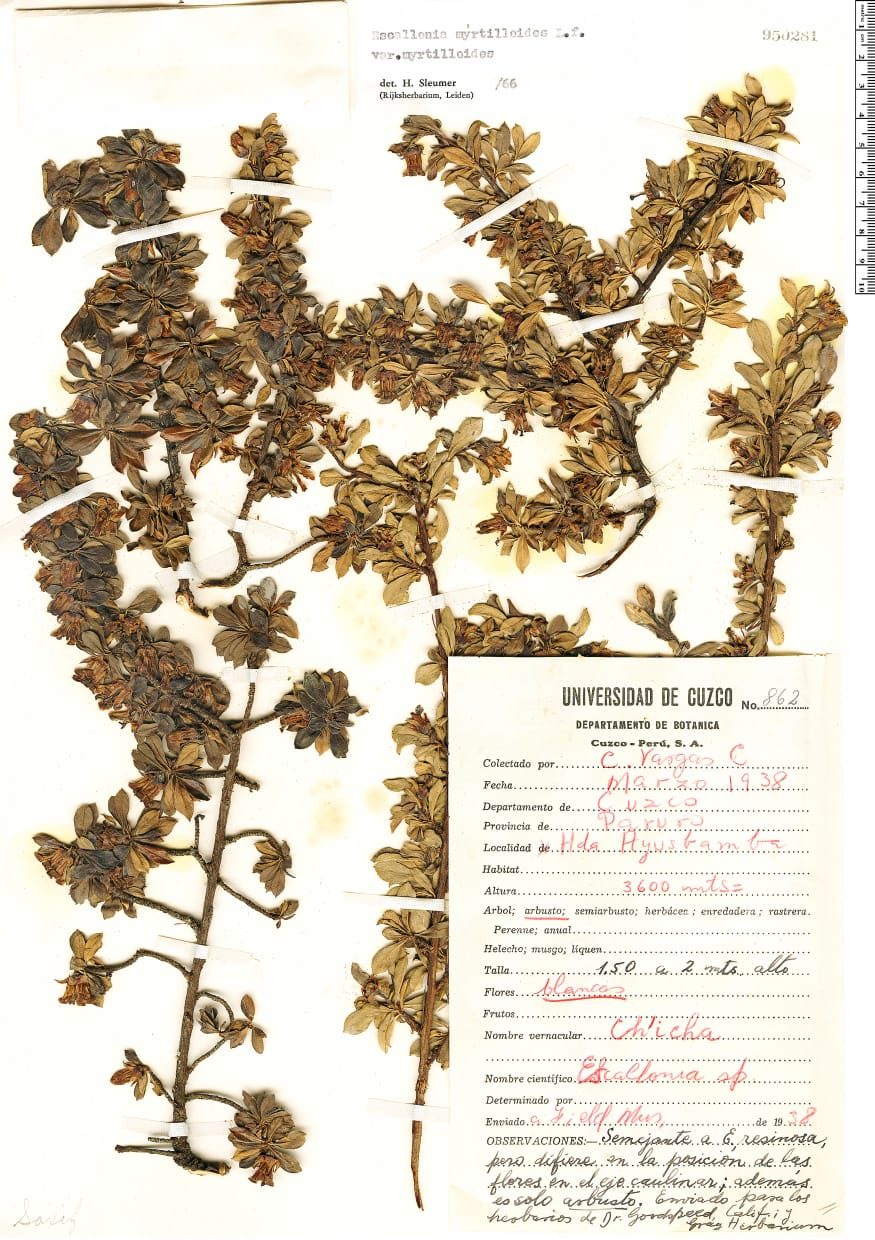
- Review herbaria and regional records, such as CUZ, Tropicos / MOBOT, and historical collections.
- Collect seeds locally or from nearby populations, with permission and traceability.
- Test nursery propagation: germination, cuttings, initial growth, tolerance to irrigation and frost.
- Monitor survival and use by birds in pilot plots.
- Integrate the species into the interpretive discourse of the observatory.
9. ESCALLONIA AS A SYMBOL OF A NEW ANDEAN CONSERVATIONISM
Not Only Saving Species, but Rebuilding Relationships
Twenty-first-century Andean conservation cannot be limited to “protecting what remains.” It also needs to restore what was lost. And restoration does not mean filling a space with nursery trees lacking ecological identity. It means rebuilding relationships among soil, water, vegetation, insects, birds, and community.
Escallonia is useful for thinking about this shift in perspective because it forces us to unite several scales:
- the evolutionary scale, where the genus tells the history of the Andes,
- the taxonomic scale, where distinguishing species matters,
- the landscape scale, where relict forests sustain biodiversity,
- the social scale, where firewood, local use, and poverty influence forest loss,
- and the restorative scale, where each planted tree can help rebuild a habitat.
The Tree That Should Be at the Center of the Story
In the Peruvian Andes, many conservation campaigns still revolve almost exclusively around charismatic fauna: condors, bears, hummingbirds, pumas. This helps communication, but it can hide an uncomfortable truth: without native trees and shrubs, those animals have nowhere to live.
For this reason, species such as Escallonia resinosa and E. myrtilloides deserve to move out of the botanical footnote and into the center of the story. Not as a replacement for fauna, but as a reminder that all real conservation begins with habitat.
10. AN URGENT RESEARCH AGENDA FOR PERU
If I had to propose a minimum scientific agenda on Escallonia in the Peruvian Andes, it would include the following lines:
1. Fine-Scale Mapping of Relict Populations
Locate and georeference forests, shrublands, and isolated trees of Escallonia resinosa and E. myrtilloides in Cusco, Apurímac, Puno, Junín, and other regions.
2. Dendrochronology and the True Age of Monumental Individuals
Confirm the age of relict trees through anatomical analyses, chronologies, and, if necessary, radiocarbon dating.
3. Regeneration Ecology
Do they germinate better in clearings? Under shade? What role does grazing play? What survival rates do they have in restoration?
4. Use by Birds
Monitor which bird species use Escallonia for foraging, refuge, singing, or nesting.
5. Population Genetics
Determine whether Peruvian populations of “chachacomo” truly correspond to E. resinosa sensu stricto or to regional complexes.
6. Applied Restoration
Develop nursery and planting protocols for observatories, communal areas, rural schools, and micro-watershed projects.
11. THE FOREST THAT CAN STILL RETURN
In the mountains of Peru, there are trees that grew for centuries without anyone celebrating them. They survived ice, droughts, grazing, logging, and oblivion. They are not archaeological monuments, but they are also heritage. They are not made of stone, but of wood, resin, small leaves, and rings that preserve years of rain.
Escallonia is one of those silent heritages.
Its history speaks of mountains rising and lineages diversifying. It speaks of inter-Andean valleys, relict forests, domestic fire, botanists reviewing herbaria, centennial trees that still sustain birds, and a science that is only beginning to listen to what these forests have to say.
At a time when the Andes face erosion, fragmentation, climate change, and loss of native vegetation, looking at Escallonia means looking at a point of support for restoration. A tree that can help hold the soil, restore structure to the habitat, nourish ecological interactions, and tell a more honest story about what conservation means.
Because conserving a hummingbird without conserving its forest is an illusion.
Conserving a forest without conserving its native trees is a simplification.
And restoring an Andean landscape without recovering genera such as Escallonia would mean rebuilding it without memory.
In places such as Pachacútec Bosque Andino, where restoration and birdwatching seek to walk together, Escallonia could become more than a planted species. It could become a symbol. A reminder that the Andean forest does not recover through quick formulas, but through decisions that are botanically correct, ecologically intelligent, and culturally committed to the territory.
In the end, perhaps that is the deepest lesson of these forgotten trees of the Andes: conservation does not begin when we see a rare bird, but when we understand which plants made it possible for that bird to be there.
And among those plants, few tell a story as long, as Andean, and as urgent as Escallonia.
KEY SCIENTIFIC SOURCES USED FOR THIS ARTICLE
Main basis of the article: phylogeny, biogeography, taxonomy, and dendrochronology of the genus Escallonia and of Andean species such as E. myrtilloides and E. resinosa. Among the most relevant sources:
- Zapata, F., and related works on the phylogeny and diversification of Escallonia in montane South America.
- Dibán Karmy et al. (2024) on climatic niche conservation and the evolution of the genus.
- Sede & Denham and taxonomic revisions of Escallonia in Argentina and the Southern Cone.
- Requena-Rojas et al. (2021) on the dendrochronological potential of Escallonia myrtilloides in the Andes of Peru.
- Botanical lists and regional references from the Missouri Botanical Garden / Tropicos and Andean vegetation literature.
Autor: Percy Núñez Vargas
Coautor: Armando Isaias Medrano Zuniga
Fotografías: Armando Isaias Medrano Zuniga.
Diseño y diagramación: Armando Isaias Medrano Zuniga
Corrección de estilo: Armando Isaias Medrano Zuniga